
Flying with kids gets easier before the airport, not after. The flight usually goes better when parents make the right calls early: choose a workable route, sort out seats and documents, pack the carry-on with purpose, and think through the hard parts before they happen.
This guide is for parents flying with a baby, toddler, or preschooler who want the full air-travel process laid out in order. It moves from booking and airport prep to security, boarding, in-flight sleep, snacks, car seats, delays, and the first hour after landing.
The point is not to promise an easy flight. It is to help you build one that is more manageable. When the setup is right, even a long travel day feels less chaotic and a lot more doable.
Flying With Kids
Flying with kids gets easier when parents make the right decisions before travel day. The best approach is to choose a realistic flight, pack the carry-on around feeding, comfort, and delays, and plan each stage of the trip from airport arrival to landing with young children in mind.
What changes when you fly with a baby or toddler
Flying with kids is not just regular air travel with extra bags. The whole day works differently once you add naps, snacks, diapers, seat assignments, waiting time, and the very real limit of how long a small child can stay comfortable in a loud, crowded space. What makes family flights easier is not luck on the travel day. It is making smart choices before you ever get to the airport.
This is why a flight with young children usually feels longer than the clock says it should. A two-hour flight also includes packing, airport check-in, security, stroller handling, boarding, takeoff, landing, baggage, and the first hour after arrival. For parents flying with a baby or toddler, each one of those steps has its own friction point.
The good news is that most flight-day stress starts earlier than people think, which means a lot of it can be reduced earlier too. Seat choices, connection timing, carry-on setup, and document prep all shape how manageable the trip feels later. If you have not already reviewed what kids need to fly, that is one of the best places to start before booking and packing.
If this is your first time traveling with a baby and a toddler, check out my detailed guide here.
Why airport time works differently with young kids
Airports take longer with children because almost every step has one more layer to manage. Adults can move quickly from check-in to security to the gate with very little interruption. Families usually cannot. A diaper change, a stroller fold, a snack stop, a bathroom break, or a toddler who needs to move can change the pace of the whole morning.
That slower pace is not poor planning. It is just the reality of air travel with kids. Parents are not only trying to catch a flight. They are also trying to keep a child fed, regulated, safe, and calm through a place that is full of noise, lines, transitions, and waiting.
This is why “getting to the airport” is never the whole task when you are flying with young children. The real task is getting through the airport without using up all of your child’s patience before the plane even leaves the ground.
Why small booking decisions matter later on travel day
Small decisions made at booking often create big differences later. A short layover can sound efficient until you are unloading a stroller, carrying a diaper bag, helping a toddler through a crowded terminal, and trying not to miss boarding. A cheap fare can stop feeling like a bargain when the seat setup is bad, the flight lands too late, or the total travel time pushes your child well past their limit.
This is one of the biggest mindset shifts in family air travel tips. Booking is not just about price. It is about whether the trip still works once real life gets added to it. A nonstop flight may cost more but remove an entire round of transitions. A slightly better departure time may protect naps, meals, and mood better than a lower fare ever could.
For families trying to make better pre-flight choices, it also helps to understand the equipment side early. If car-seat decisions are part of your flight plan, reviewing best airline-approved car seats before booking can save a lot of confusion later.
Why flight days feel longer when children are involved
Flight days feel longer with children because the actual flight is only one part of the total effort. Parents flying with kids are managing the trip in layers: getting out the door on time, keeping the carry-on organized, moving through the airport, handling meals and diapers, settling into seats, and then doing it all again after landing. Even a short flight can feel like a full-day event once all those transitions are added together.
That longer feeling matters because it changes what “easy” really means. A flight that looks simple on the schedule may still be too much if it starts before your child usually wakes up, cuts straight through nap time, or lands right at the point when everyone is already worn down. This is one reason parents flying with baby first time often feel surprised by how much energy the whole day takes, even when the flight itself goes smoothly.
The more you think of the trip as one long travel window instead of just time in the air, the better your decisions tend to get. That affects what goes in the carry-on, how much margin you leave before boarding, and how realistic your expectations are for meals, naps, and patience.
Why the goal is a manageable trip, not a perfect one
The best mindset for flying with a toddler or baby is not trying to avoid every problem. It is trying to make the whole trip more workable. Children may cry, naps may be short, snacks may get spilled, and a carefully timed plan may still slide off course. That does not mean the flight failed. It usually means you are traveling with small children in a setting that asks a lot from them.
A manageable trip is one where the important things were handled well enough. You chose a realistic flight. You packed what mattered. You kept food, comfort, and cleanup close. You gave your child room to recover when part of the day got hard. That is what success usually looks like in plane travel with toddlers and babies.
This is also why flight preparation matters more than perfection on board. The calmer choice is usually the one that gives you more room to adjust. A better departure time, a smarter seat setup, and the right carry-on system do more for a family than chasing the idea of a flawless travel day.
When is the best age to fly with a baby or toddler
There is no single best age for flying with kids because every stage changes the flight in a different way. Some ages are easier for sleep. Some are easier for holding. Some are harder because mobility, boredom, and frustration all show up at once. The better question is not “What is the perfect age to fly?” but “What does flying look like at this age, and what decisions will make it easier?”
That is especially true for parents flying with a baby or toddler for the first time. A calm three-month-old, a crawling nine-month-old, a busy one-year-old, and a strong-willed two-year-old may all need very different flight plans. The good news is that each age comes with patterns parents can plan around.
If you need trip ideas and activities by age, visit this page!
What to expect from newborn flights
Newborn flights can feel easier in some ways because very young babies often sleep often, stay in one place, and do not need entertainment the way toddlers do. For parents how to fly with a baby still in the newborn stage, the biggest issues are usually feeding, diaper changes, recovery after birth, and how comfortable the parents feel handling a flight so early.
This stage usually works best with simple flight plans. A nonstop route, a manageable airport, and a calm arrival plan often matter more than anything else. Newborns may be more portable than older babies, but they still require frequent care, and parents are often the ones doing the harder part of the adjustment.
What changes between 3 and 6 months
Between 3 and 6 months, some babies become easier to fly with because feeding may feel more predictable and they may still nap well in motion. Parents also tend to feel more confident by then, which can make the whole airport process feel less intimidating. For families flying with baby first time, this can be a more manageable stage for a first flight.
Even so, it still helps to keep expectations simple. A baby this age may handle the flight well and still struggle with overstimulation, delayed naps, or a long travel day. That is why a well-timed flight and a calm carry-on setup still matter.
Saved. I’ll keep the next sections in the same format, and I’ll work in tables and short lists where they make the content easier to scan.
What changes between 6 and 12 months
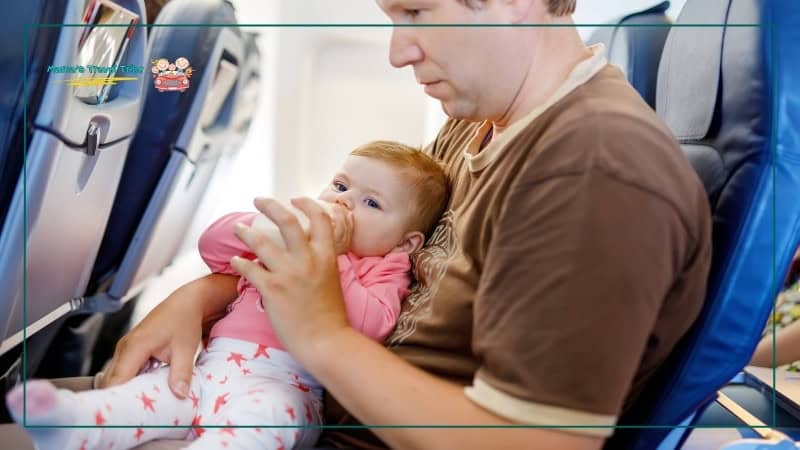
Between 6 and 12 months, flights often get harder in one specific way: babies want to move more, but they still cannot manage the airport or the seat space on their own. A younger baby may nap in arms and stay fairly contained. An older baby may want to crawl, pull, reach, squirm, and grab everything within sight. That changes the full experience of flying with a baby.
This is also the stage where feeding can feel more complicated. Parents may be juggling bottles or breastfeeding along with baby food, snacks, bibs, and more cleanup. Sleep can get less predictable too. Teething, short naps, and overstimulation can all show up at the same time.
A simple way to think about this stage is that portability starts to drop while needs stay high. That does not make flying impossible. It just means the flight works better when parents build in more movement before boarding, pack a tighter activity kit, and expect to do more active managing in the seat.
Quick view:
| Age range | What often feels easier | What often gets harder |
| 6 to 8 months | Still easier to hold, may nap in motion | More distracted feeding, less content staying still |
| 9 to 12 months | More aware of routines, may enjoy simple interaction | Crawling, grabbing, resisting confinement, shorter patience |
What flying with a 1-year-old is really like
Flying with a 1-year-old is often one of the busiest stages because the child wants action but does not yet have the patience, language, or self-control to handle long waiting well. This is where many parents start searching harder for real answers about how to fly with a toddler, even if their child has only just crossed out of babyhood.
A one-year-old may walk, cruise, or want constant movement. They may also resist sitting for long stretches, throw items, reject meals they normally eat, and melt down quickly once they get tired. That makes the airport just as important as the flight. If a child spends the whole gate period trapped in a stroller or seat, boarding often starts from a worse place.
This age usually goes better when parents keep the plan simple:
- Choose the most direct flight you can
- Leave room for movement before boarding
- Pack snacks in small stages, not one large bag dump
- Rotate activities before boredom turns into frustration
- Expect the child to need active help through most of the flight
If you know the hardest part will be keeping your child busy in the seat, the guide to plane activities for a 1-year-old fits naturally into this stage, even if your child is a little older or younger.
What flying with a 2-year-old is really like
Two-year-olds can be easier than one-year-olds in some ways and harder in others. They may understand more, follow simple directions, and respond to routines better. They may also push harder against limits, resist the seatbelt phase, refuse transitions, and get louder when they are frustrated. Flying with a toddler at this age often depends less on baby-style soothing and more on pacing, timing, and structure.
This is also the age when seat questions become more practical. Parents start thinking more seriously about space, comfort, restraint, and whether bringing a car seat on board is worth the effort. If that decision is part of your flight plan, reading does a 2-year-old need a car seat on a plane before booking can make the rest of the setup easier.
Two-year-olds tend to do better when the flight day has a clear rhythm:
- food before hunger gets sharp
- movement before boredom turns physical
- activities before frustration takes over
- rest before overtired behavior starts showing up
That rhythm matters more than having a perfect bag full of tricks.
How preschoolers change the flight experience
Preschoolers often make flying easier in a few clear ways. They can usually understand simple explanations, wait a little longer, and take part in more activities. They may be potty trained or close to it. They may also be better at telling you what feels wrong instead of going straight into crying or refusal.
That said, preschoolers can still have a rough flight day. They may get overtired, overwhelmed, hungry, or stuck in a seat longer than they can handle well. The difference is that parents can often prepare them more directly. A simple explanation of what happens at check-in, security, boarding, and takeoff can help a lot.
For this age, the flight often works best when parents treat them as capable but still very young. They can handle more than a toddler, but they still need structure, predictable food, and realistic timing.
How mobility changes everything in the airport and on board
Mobility changes the whole flight experience because once a child wants to move, the travel day becomes less about carrying them and more about managing movement in the right places. A non-mobile baby may stay content in arms, a stroller, or a carrier for long stretches. A mobile baby or toddler usually will not.
That affects nearly every stage of flying with young children:
- check-in takes longer because the child wants down
- gate time matters more because they need to move before boarding
- boarding gets harder if they have already been contained too long
- the seat feels smaller because they want to climb, kneel, turn, and reach
This is one reason there is no single best age to fly with a baby or toddler. The easier stage is often the one that matches the type of flight you booked. A short nonstop flight may feel very manageable with a mobile toddler. A long connection day may not.
How to choose the right flight for a family
A lot of flight stress is decided before the airport. Parents often focus on destination, price, or departure date first, but the flight itself can make the day much easier or much harder. With young kids, the better flight is usually the one that reduces transitions, protects the strongest part of your child’s day, and leaves less room for one delay to wreck the whole plan.
This is where broad advice about flying with kids becomes practical. A cheaper fare may not be the better option if it adds a long layover, a late-night arrival, or a connection that only works when everything runs on time. A family flight needs to be judged by how it works with real children, not just by what it looks like on the booking screen.
A useful way to compare flights is this:
| Flight factor | Usually worth paying more for | Usually not worth paying more for |
| Route | Nonstop or fewer transitions | A complicated route that saves a small amount |
| Timing | Departure that fits your child’s strongest window | A “perfect” time on paper that clashes with sleep or meals |
| Layover | Enough time to move without rushing | Bare-minimum connection times with kids and gear |
| Arrival | Landing before everyone is running on fumes | A late arrival that pushes right into meltdown hours |
Before planning any trip, ensure you can guarantee your family’s safety. Read our guide on family travel safety guidelines for more information.
Nonstop vs connecting flights with young children
For most families, nonstop is better if the price difference is reasonable. A connection means another gate, another boarding process, another bathroom scramble, another round of seat settling, and another chance for the day to start slipping. That is a lot to ask from a baby, toddler, or preschooler who has already spent hours in transit.
Connecting flights are not always wrong. Sometimes they are the only good option. Sometimes a long route needs a break in the middle. But a short connection can turn into the hardest part of the trip fast. Parents are not just moving themselves. They are moving the child, the stroller, the carry-on, the snacks, the documents, and whatever mood the day has turned into by then.
In most cases, nonstop is the cleaner choice when you are flying with a baby or toddler because it removes one full cycle of transition. That matters more than people expect.
Early morning vs nap-time vs evening flights
There is no universal best flight time, but there is usually a best flight time for your child. Some kids do best early, before the day has had time to go sideways. Some handle travel best when the flight lines up with a regular nap. Some seem like they should sleep on an evening flight and then end up wired, overtired, and miserable by landing.
The better question is not “What time do other families prefer?” It is “When is my child usually easiest to manage?” For many families, that is the strongest booking filter.
A quick way to think about timing:
| Flight time | What can work well | What can go wrong |
| Early morning | Child is fresh, airport may be calmer, fewer daytime delays | Early wake-up can start the day rough |
| Nap-time | May line up with rest, can reduce active boredom | Child may not nap well in transit |
| Evening | Some children sleep, can preserve daytime plans | Overtiredness, late arrival, bedtime collapse |
If your child only naps well in a crib, a nap-time flight may not buy you much. If your child falls apart by late afternoon, an evening departure may be more trouble than it looks.
Why total travel time often matters more than ticket price
Families sometimes save money on a fare and then pay for it in patience, energy, and a much harder arrival. A shorter overall travel day often does more for a family than a lower base fare. That is especially true with babies and toddlers because the real issue is not just time in the seat. It is how long the full chain of travel lasts.
A short flight with a bad connection can create a longer day than a slightly more expensive nonstop. A cheaper itinerary that lands after bedtime can carry a cost that does not show up on the booking page. For families flying with young children, the total travel window is often the better number to watch.
When comparing flights, it helps to ask:
- How long will the child be in travel mode from leaving home to arrival?
- When will real meals happen?
- When will the child be expected to sit still?
- What part of the day will landing hit?
Those answers usually tell you more than the ticket price alone.
How to think about layover length with kids
If you need a connection, layover length matters more with children than with adults. You need time to deplane, move through the terminal, stop for the bathroom, deal with a diaper change if needed, refill water, buy food if necessary, and get to the next gate without rushing your child through every step.
A layover that looks generous for an adult can feel tight with a stroller, a toddler, and a bathroom stop in the middle. A layover that is too long can also backfire if your child runs out of energy before the second flight even starts.
The best layover is usually one with enough room to move but not so much room that the whole day drags on. Families often do better with one useful break than with either a frantic connection or a drawn-out airport day.
How to avoid risky connections that create stress later
Risky connections are the ones that only work if the first flight is on time, the gate is close, the bathroom can wait, the child cooperates, and nobody needs food or a diaper change right then. That is a bad bet with little kids. A family connection should have room for at least one thing to go wrong.
You do not need a perfect cushion. You need enough time that one delay does not force the entire family into a rushed, panicked sprint. That kind of rushing usually costs more later because kids board already stressed, already hungry, or already exhausted.
A good rule is simple: if the connection would feel annoying as an adult, it will probably feel rough with children. If it would only work on your best day, it is probably too tight for a family travel day.
When a cheaper flight is not worth the trade-off
A cheaper flight stops being a deal when it creates the kind of travel day your child cannot manage well. That might mean two connections instead of one nonstop. It might mean a late landing, a very early departure, or a layover that turns a simple trip into an all-day airport haul. It might also mean bad seating options that leave a family split or cramped in a way that makes the flight harder than it needed to be.
Families flying with kids usually get the most value from simplicity. A cleaner route, better timing, and more workable connection window often do more for the trip than saving a modest amount on the fare.
A useful test is this: if the cheaper flight adds one more major stress point, it may not really be the better option. It is easy to see the fare difference. It is harder to see the cost of a much longer, messier day until you are already in it.
Should your child fly as a lap infant or in their own seat
This is one of the biggest booking decisions in family air travel because it affects space, safety, sleep, and how hard the flight feels once you are actually on board. For parents flying with a baby, the lap infant option can lower the ticket cost and seem simpler at first. For parents flying with a toddler, a separate seat can make the whole cabin setup easier, especially on longer routes.
There is no single right answer for every family. The better choice depends on your child’s age, size, flight length, temperament, sleep habits, and how much you are willing to carry through the airport. It also depends on whether you plan to use an approved car seat on the plane, which changes the whole seat equation.
A simple comparison helps:
| Option | What usually helps | What usually gets harder |
| Lap infant | Lower cost, less gear on board, easier on short flights | Less space, harder naps, more arm fatigue, tougher meal times |
| Own seat | More room, better sleep setup, easier restraint options | Higher fare, more planning, more gear if using a car seat |
Lap infant basics parents should understand first
A lap infant usually means a child under two flies without a separate ticketed seat and stays in an adult’s lap for takeoff, landing, and most of the flight. This setup is common because it saves money and can work well on short flights, especially with younger babies who still feed often and settle well in arms.
It can also be more tiring than parents expect. A lap infant setup means less personal space, fewer ways to set the child down, and a harder time managing snacks, tray tables, naps, and your own comfort. On a very short route, that may be fine. On a longer route, it can turn into a long stretch of constant holding.
For parents flying with baby first time, the lap infant option often looks easiest during booking. It helps to think past the price and picture the real seat time from taxi to landing.
When paying for a separate seat makes sense
A separate seat often makes sense when the child is big, active, hard to hold for long stretches, or likely to sleep better with a defined space. It can also make sense when the flight is long enough that comfort starts mattering more than the fare difference.
This is often the point where flying with a toddler shifts away from the lap infant model. Many toddlers do not want to stay in an adult’s lap for extended periods. They want their own space, their own seatbelt routine, and a setup that gives parents a little breathing room.
A separate seat is also worth a closer look if:
- the flight is long-haul or overnight
- the child already dislikes being held for long periods
- you plan to bring an approved car seat
- you need a better chance of in-flight sleep
- you are traveling solo with a child
How age and size affect the decision
Age matters, but size and behavior often matter more. A small, calm child close to age two may still be manageable as a lap infant on a short flight. A large, mobile one-year-old may be much harder to manage in the same setup. The booking rule may be age-based, but the practical decision usually is not.
A useful way to frame it:
| Child stage | Lap infant often works better when… | Own seat often works better when… |
| Younger baby | Flight is short, baby feeds well in arms, naps easily | Flight is long, sleep matters, parents want more space |
| Older baby | Baby still settles well and is not constantly mobile | Baby is heavy, active, crawling, or hard to contain |
| Toddler under 2 | Child tolerates being held and route is simple | Child is big, restless, strong-willed, or needs structure |
This is one reason broad family air travel tips can feel too vague. The child’s actual build, tolerance, and sleep habits usually tell you more than the age cutoff alone.
Short-haul vs long-haul seat decisions
Short-haul flights give parents more room to accept trade-offs. Holding a baby for ninety minutes is very different from holding that same child through boarding, taxi, a long flight, descent, and delays on each end. On a short route, a lap infant can be fully manageable. On a long-haul route, the same setup can feel cramped fast.
The longer the flight, the more a separate seat tends to help with:
- body space
- snack handling
- nap support
- parent fatigue
- toddler containment
- overall comfort
That does not mean every long flight requires a separate seat. It means the cost-versus-comfort decision changes as flight duration rises.
The real cost vs comfort trade-off
The biggest trap in this decision is comparing only the fare. A lap infant may be cheaper on the booking screen, but that does not automatically make it the better value. Parents have to weigh the ticket savings against the cost in comfort, sleep, arm strain, and how hard the cabin time will be.
For some families, saving the money is the right call. For others, paying for the extra seat makes the travel day much more workable. That is especially true when plane travel with toddlers is already likely to be active, loud, and tiring.
A good rule is to think in terms of total flight experience, not just booking cost. If the separate seat clearly improves safety, sleep, or manageability, it may be the better use of the budget.
How the choice affects sleep, space, and safety
This decision touches three of the hardest parts of flying with young children: sleep, personal space, and restraint. A lap infant may sleep well in arms on some flights, especially at younger ages. On other flights, the child wakes easily, feeds poorly, or gets overtired because there is no clear place to settle. A separate seat gives more setup options, especially if parents use an approved child restraint or car seat.
Space matters too. Parents using the lap infant setup often lose room for their own meal, posture, and movement. That may be manageable for a short flight. It becomes more noticeable on long travel days.
Safety questions come up here as well. Many parents start with the seat-price question and then realize they are really deciding between convenience and a more structured setup. If that is where you are, reading does a 2-year-old need a car seat on a plane can help you think through the restraint side before you finalize the booking.
Choosing the best seats when flying with kids
Seat selection changes more than comfort. It affects diaper-change access, snack handling, sleep, bathroom trips, sibling logistics, and how trapped everyone feels once the seatbelt sign comes on. Parents looking up flying with kids often focus on the ticket first and the seat map second, but the seat map can shape the whole flight.
The right seat depends on the child’s age, the length of the flight, and whether you are using a lap infant, a separate seat, or an FAA-approved car seat. A seat that works for a three-month-old may be a poor fit for a two-year-old who wants to stand, turn, and reach for everything. A setup that looks fine on paper can feel rough once snacks, naps, and bathroom runs start.
A quick comparison:
| Seat choice | Often helps with | Often makes harder |
| Window | Containment, fewer aisle interruptions, visual distraction | Bathroom trips, getting out with a restless child |
| Aisle | Easier exits, faster diaper or potty runs | More passing traffic, more temptation to wander |
| Bulkhead | Extra floor space feel, bassinet access on some routes | Fixed armrests, less under-seat storage during takeoff and landing |
| Standard row | Familiar setup, simpler storage | Less room if child is active or in a car seat |
Aisle vs window when you are flying with young children
For most families, the best choice is usually a window-and-middle pairing or a full row when possible. The window helps contain a child who wants to lean, look out, or settle against one side. It also reduces how often the child gets bumped by carts or people walking past. That can matter a lot when flying with a toddler who gets distracted every time something moves down the aisle.
The aisle has its own advantages. It is easier for diaper changes, potty trips, walking a baby, or stepping out with a child who is reaching the end of their patience. Parents flying with a baby often like aisle access for feeding adjustments and bathroom runs. The downside is that the aisle can keep a mobile child overstimulated. They see movement, they want movement, and they often try to lean into the traffic.
A simple way to decide:
- choose window if containment matters most
- choose aisle if bathroom access matters most
- choose both sides of the row if one adult can manage each role
When bulkhead rows help and when they do not
Bulkhead rows can help on some flights, especially for families with younger babies or for parents trying to gain a little more front-facing room. On certain airlines and aircraft, bulkhead rows may also be where bassinet positions are available. That is why they often come up in searches for flying with a baby and long-haul family flights.
They are not always better. Fixed armrests can limit flexibility. Under-seat storage may not be available during taxi, takeoff, and landing, which means your most-used items are harder to reach when you want them most. Some parents book bulkhead expecting extra ease and then find the access trade-off annoying with toddlers, snacks, and constant small-item use.
Bulkhead rows tend to work better when:
- you want bassinet access
- you need a little more open feel
- your child is younger and less active in the seat
They tend to work worse when:
- you rely on easy under-seat access
- your toddler needs frequent item rotation
- fixed armrests interfere with your setup
Should you sit near the bathroom or farther away
Sitting near the bathroom can be helpful if you expect diaper changes, toddler potty runs, or frequent hand washing. It reduces the distance you need to manage with a tired child in a narrow aisle. This can be useful in family air travel, especially on longer flights or when traveling solo with young children.
The trade-off is traffic. Bathroom-adjacent rows often have more people standing nearby, more door noise, and more distraction. That can make it harder for a baby to nap or for a toddler to stay settled. If sleep matters more than access, being a few rows away is often the better choice.
A practical middle ground is usually best: close enough that the bathroom is manageable, not so close that the whole row feels like part of the line.
Seat setups that make family travel harder
Some seat arrangements create more work than they save. A split row where one parent sits across the aisle from the child can be harder than expected if the child needs constant help. Separate rows can make snack pacing, activity rotation, and takeoff support more awkward. Window seats far from a caregiver are rarely a good setup for babies or toddlers.
Families flying with kids usually want to avoid:
- rows that split caregivers from the youngest child
- seats with limited storage if you need frequent access
- layouts where siblings cannot be reached easily
- tight connections between flights that make seat changes more likely
This matters even more if the airline changes aircraft or seating later. Checking the seat map again before departure can prevent a bad surprise on travel day.
How to keep siblings and caregivers together
Keeping family members together is one of the most practical parts of seat planning. If one adult is managing a baby and another is managing a toddler, the row setup should make that easy, not harder. For many families, the best layout is one adult next to one child, with the second adult and second child directly across the aisle or in the same row if possible.
For three-seat rows, a common setup is:
- window: child
- middle: caregiver
- aisle: second caregiver or second child
For four-seat center sections on larger aircraft, families often get better control by keeping the group in one block rather than split on both sides of the plane.
The earlier you deal with this, the better. Seat selection gets harder closer to departure, especially on full flights.
When extra legroom is worth paying for
Extra legroom is worth considering when the added space clearly reduces stress. It can help with car seat installation on some aircraft, getting in and out more easily, and giving adults a little more room to manage bags, snacks, and lap-infant positioning. On longer flights, that extra space can feel much more useful than it does on a short route.
It is not always worth the price. If the child is flying as a lap infant on a short flight, or if the seat comes with restrictions that make storage harder, the benefit may be smaller than expected. Parents flying with a toddler usually get the most value from extra legroom when the child has their own seat and the family expects a longer cabin stretch.
A good test is simple: if more space will directly help with restraint, sleep, getting out, or reducing conflict in the row, it may be worth paying for. If it only looks nicer on the seat map, maybe not.
What documents do kids need to fly
Documents get confusing fast because the answer changes with the route, the child’s age, and who is traveling with them. Parents searching flying with kids often want one simple list, but family air travel usually works better when you think in categories: domestic flights, international flights, proof of age, and backup copies in case someone asks for more than you expected.
This section stays focused on flight-specific planning. It is not meant to replace a full paperwork guide. If you want the broader version before your trip, our Child Travel Documents Guide blog is the best companion piece to this section.
A useful way to organize it:
| Travel type | What usually matters most |
| Domestic flight | Proof of age in some cases, booking details, backup copies |
| International flight | Passport, exact name match, country-specific entry rules |
| One-parent or guardian travel | Extra permission paperwork may matter |
| Cruise plus flight | Flight documents and cruise documents may differ |
What matters on domestic flights
Domestic flights are usually simpler than international ones, but that does not mean parents can skip document prep. A baby or toddler may still need proof of age in some situations, especially if they are flying as a lap infant or close to an age cutoff. The airline may not ask every time, but that is not something to leave to chance.
For families flying with young children, the easiest approach is to carry one document that clearly shows the child’s full name and date of birth, along with the booking details for the flight. That gives you a clean answer if a gate agent or check-in desk asks for age verification.
What changes on international flights
International flights are where the document list gets stricter fast. A child needs their own passport for international air travel, even when they are very young and even when they are sitting in a parent’s lap. Parents sometimes assume babies travel under the adult’s passport setup. They do not.
The other detail that trips families up is name matching. The child’s ticket, passport, and reservation details need to line up exactly. Even a small mismatch can cause trouble at check-in or immigration. For flying with a baby or toddler, this is one of the easiest mistakes to prevent if you check it early.
How proof of age works for children
Proof of age matters most when the child’s age affects the way they are ticketed. That usually comes up with lap infants, children close to turning two, and any booking where the fare or seat requirement changes by age. This is why age verification matters more in family air travel than many first-time parents expect.
It helps to keep this simple. You do not need a stack of paperwork for routine domestic flying. You do need one clear record that supports your child’s age if someone asks. That can save a lot of stress at bag drop or the gate.
A quick rule of thumb:
| Situation | Why proof of age may matter |
| Lap infant | Airline may want to confirm the child is under the lap infant cutoff |
| Child near age two | Agent may check whether a separate seat is required |
| Discounted child fare or special booking | Age can affect fare rules |
When a birth certificate may help or be required
A birth certificate is often the document parents think about first, and for good reason. It is a common way to show age for babies and toddlers who do not have other forms of identification. Even when it is not required every time, it is often the easiest backup to carry for domestic air travel.
If that is the part you are unsure about, do you need a child’s birth certificate to fly domestic goes deeper into when parents actually use it and when it tends to come up.
For most families, the point is not carrying paperwork for the sake of it. The point is having the one document most likely to solve an age question quickly.
Passport basics for babies, toddlers, and preschoolers
For international flights, the passport is the main document to worry about. The big things to check are simple:
- the child has their own valid passport
- the name matches the booking exactly
- the expiration date works for the destination
- the passport is packed where you can reach it quickly
Parents flying with baby first time often focus on getting the passport issued and forget to recheck the details before departure. The second check matters just as much as the first.
Here’s how you can apply for your child’s passport according to the US Department of State (Travel).
What to think about for one-parent travel
One-parent travel can bring extra questions, especially on international routes. A child traveling with only one parent, a grandparent, or another guardian may need additional paperwork depending on the destination and the situation. This is not something every family gets asked for, but it is something that can become a problem if it comes up and you are not ready.
For family air travel, it is smart to think ahead about what proves permission and relationship. A little prep here is easier than trying to solve it in the airport.
You can find out more about what kind of paperwork would be needed when traveling as a guardian here.
Why digital and paper backups both matter
Travel days are bad times to rely on one system. Phones die. Screens crack. Internet access drops. Paper gets buried in the wrong bag. The easiest fix is to keep both a paper copy and a digital copy of the most important child travel documents.
For parents flying with kids, this usually means:
- one paper set in an easy-to-reach folder
- one digital set saved on your phone
- reservation details easy to pull up without digging through email
That is usually enough. You do not need a complicated document system. You need one that still works when the travel day gets messy.
What to book or request before the travel day
Some flight problems start before the airport. A missing bassinet request, the wrong stroller assumption, or a car seat that does not meet airline rules can turn a manageable flight into a messy one. Parents flying with kids usually do better when they treat booking as more than buying tickets. It is also the point where you confirm the small details that affect boarding, carry-on space, infant travel, and the cabin setup.
A good pre-flight check looks like this:
| Item to check before departure | Why it matters on flight day |
| Bassinet request | Availability is limited and often tied to specific seats |
| Stroller policy | Affects airport movement, gate check, and baggage planning |
| Car seat approval | Avoids trouble at boarding if you plan to use it on board |
| Early boarding rules | Changes how you handle gate time with babies and toddlers |
| Child meal request | Can help on longer flights, but only if offered and confirmed |
| Baby baggage allowance | Changes what you can bring without extra surprises |
When to request a bassinet
A bassinet can help on longer flights with a young baby, but it is never something to assume will be available automatically. Airlines usually have limited bassinet positions, and those seats are often tied to bulkhead rows. If you want one, request it as early as you can and then check again before departure.
Parents flying with a baby on a long-haul route often like the idea of a bassinet because it may give the child a place to rest without spending the whole flight in arms. The trade-off is that bassinets come with airline-specific limits around age, weight, and size. Some babies fit the age range but are already too big for the setup to be useful.
A simple rule works here: if the flight is long enough that arm fatigue and sleep are real concerns, it is worth asking early. If the route is short, the bassinet may not matter much.
What to check about stroller policies
Stroller rules change by airline, and this is where a lot of parents lose time on travel day. Some airlines allow gate check easily. Some have size or weight rules. Some treat larger strollers differently from compact travel strollers. If you do not check before departure, you may end up repacking at the gate or handing over gear earlier than expected.
For family air travel, stroller policy affects more than the airport walk. It changes how you move through security, how long your child can stay contained, and how much you can carry without burning out before boarding. Parents flying with young children often need the stroller right up to the gate, especially when there is a long terminal walk or a tired toddler in the mix.
Check three things before the flight:
- whether the stroller can be gate checked
- whether there are size limits
- whether you need a tag or special handling at check-in
How to confirm car seat approval before flying
If you plan to use a child restraint system on the plane, do not wait until boarding to find out whether it is approved. The seat needs to meet the airline’s rules, and it also needs to fit the aircraft seat in a practical way. That includes width, installation direction, and whether your child will actually tolerate the setup for the full cabin time.
This is where the gear side of flying with a toddler or older baby gets very practical. Parents often know they want the added structure of a car seat but have not checked whether the seat is airline approved. If you are still sorting that out, best airline-approved car seats is the right place to narrow the options before the trip.
It also helps to think about the full chain:
- can you carry it through the airport
- will it fit your booked seat
- does your child sit well in it for longer stretches
- is the setup worth it for this specific route
What to know about early boarding rules
Families often assume early boarding is always the best choice. Sometimes it is. Sometimes it just means more time trapped in a small seat before takeoff. That is why it helps to know both the airline’s family boarding rule and your child’s actual temperament before the travel day starts.
Early boarding tends to help more when:
- you have a lap infant and a lot to organize
- you need time to install a car seat
- you are traveling solo with a child
- the carry-on setup takes a few minutes to sort
Boarding later can work better when:
- your toddler needs more movement before sitting down
- the plane is already delayed and patience is fading
- you can get settled quickly without extra time
The rule matters less than having a plan. If you know whether you want to board early or late, the gate phase gets easier.
Should you request infant or child meals
Infant meals and child meals can help on longer flights, but they are not something to rely on without checking the airline’s exact policy. Some carriers offer them on certain routes. Some do not. Some require the request well in advance. Even when a meal is confirmed, it may not match what your child will actually eat.
That is why most parents flying with kids should treat child meals as a bonus, not the main feeding plan. They can be useful, especially on international flights, but your carry-on still needs a full snack and feeding setup that works without airline food.
A practical way to think about it:
| Meal option | Best way to treat it |
| Infant or child meal request | Helpful backup if confirmed |
| Airline standard meal | Not reliable for small-child timing |
| Parent-packed snacks and feeding supplies | Main plan |
When special assistance makes travel easier
Some families do not think to ask for assistance because they assume it is only for medical situations. In practice, there are cases where help with wheelchair transport, long terminal movement, or other airport logistics can make the day more manageable. This matters most when one adult is traveling solo with multiple young children, when there is a tight connection, or when there are mobility concerns in the group.
The point is not to ask for help you do not need. It is to notice when a small support request could prevent the hardest part of the day from snowballing.
What baggage allowances apply to babies and young kids
Baggage rules for babies and toddlers are easy to guess wrong. Some fares include baby gear differently from regular baggage. Some airlines allow certain infant items without counting them the same way. Others are stricter. That matters because it affects whether you can bring the stroller, car seat, diaper bag, and extra infant items without paying more or rearranging bags at the airport.
Parents flying with a baby should check:
- whether a diaper bag counts separately
- whether stroller and car seat transport is included
- whether lap infants get any baggage allowance
- whether international and domestic routes differ
This is one of those sections where a ten-minute check before travel day can prevent a lot of gate stress later.
How to prepare in the week before your flight
The week before a flight is where most parents either lower the stress or leave too much to the last day. For flying with kids, this stage matters because the airport is a bad place to discover a missing document, an empty tablet, a broken zipper, or a snack plan that was never really a plan. The work here is not complicated. It just needs to happen before you are tired.
Think of the week before the flight as a short reset window. You are checking the rules, tightening the packing plan, and making sure the travel day starts with fewer loose ends.
A simple prep map:
| Task | Best time to do it | Why it helps |
| Check passports, tickets, and names | 5 to 7 days before | Gives you time to fix booking problems |
| Review airline rules | 4 to 6 days before | Prevents surprises about bags, strollers, or seats |
| Start packing by category | 3 to 5 days before | Cuts last-minute panic |
| Prep snacks and feeding supplies | 1 to 2 days before | Keeps the carry-on practical |
| Download shows and charge devices | 1 to 2 days before | Avoids gate and in-flight problems |
| Talk through the day with toddlers | 1 day before | Reduces resistance at transitions |
Rechecking documents and reservations
Start with the details that can actually stop the trip. Check the child’s name on the booking. Check passport dates if the flight is international. Check that the lap infant or child seat assignment is showing correctly. If one parent is traveling alone with the child, this is the time to confirm that all supporting paperwork is in the bag, not on the kitchen counter.
For air travel with kids, a quiet ten-minute document review is worth more than a rushed airport fix. Parents often assume the booking is fine because it was fine when they made it. That is not always enough. Airlines change aircraft, seat maps move, and family bookings do not always stay exactly as expected.
Use a short list:
- child’s full name matches the booking
- passport is valid if needed
- proof of age is packed if useful for the route
- seat assignments are still correct
- lap infant status is attached to the reservation if relevant
If you want the full paperwork view again before travel day, what kids need to fly is the right page to review here.
Reviewing airline rules before travel day
Parents lose time at the airport when they assume all airlines handle families the same way. They do not. Stroller rules, baggage allowances, early boarding, bassinet requests, and carry-on limits can vary enough to matter. Checking these rules a few days before departure is easier than trying to read them while standing in line with a toddler.
This matters most for:
- stroller gate check rules
- diaper bag and baby item allowances
- car seat approval and cabin use
- early family boarding policy
- child meal or bassinet requests
- battery and device rules if you are relying on screens
For plane travel with toddlers, this step usually pays off by removing one avoidable argument at check-in or the gate.
Packing in categories instead of last-minute panic
Packing goes better when you sort by use, not by room in the house. That means keeping flight-day essentials separate from checked items and grouping things by what they solve: diapering, feeding, clothing, sleep, medicine, snacks, activities, and cleanup. This is much easier to do three days before the flight than at midnight the night before.
A category system also helps if you are flying with a baby and toddler at the same time. Some items overlap, but many do not. The baby may need bottles and diapers. The toddler may need snacks, backup clothes, and a tighter activity setup. Sorting by category keeps those differences visible.
A workable flight packing setup looks like this:
| Category | Keep in carry-on | Can go in checked bag |
| Diapering | Diapers, wipes, changing pad, disposal bags | Bulk diaper supply |
| Clothing | One or two backup outfits, spare shirt for parent | Extra outfits |
| Feeding | Bottles, formula or milk plan, bibs, snacks | Overflow feeding items |
| Sleep and comfort | Comfort item, light layer, pacifier if used | Extra sleep gear |
| Activities | Small activity kit, downloaded tablet | Backup toys |
| Health | Medicine basics, tissues, sanitizer | Extra supplies |
If this is your first family trip, check out our ultimate family travel packing list.
Making a realistic sleep plan before the flight
A flight does not need a perfect sleep plan, but it needs a realistic one. Parents often hope the child will just sleep because the flight falls near nap time or bedtime. Sometimes that happens. Sometimes it does not. A better approach is to decide what kind of sleep you are aiming for and what you will do if it falls apart.
For flying with a baby, that may mean feeding, holding, and keeping one familiar sleep cue close. For flying with a toddler, it may mean lowering your expectations and focusing on rest, not full sleep. A child who dozes for thirty minutes may still handle the rest of the day better than one who never settles at all.
Think through:
- Is this a nap flight or just a quiet-rest flight?
- What usually helps your child sleep away from home?
- Will they be in a lap setup or their own seat?
- What is the backup plan if no sleep happens?
If overnight sleep is a major part of your plan, the guide on how to make a bed on a plane is the right place to read before the flight, not at the gate.
Prepping snacks and feeding supplies
Snack prep is one of the easiest ways to make the day smoother. Do not leave it as a vague plan. Decide what is going in the carry-on, what stays in easy reach, and what the child can eat in stages without creating a huge mess. Parents flying with young children usually do better when they pack more structure and less randomness.
A useful pattern:
- one quick snack for waiting
- one filling snack for delays
- one familiar comfort snack
- one parent snack so the adult does not crash too
For babies, the same logic applies to bottles, pumped milk, formula, baby food, and cleanup items. Put the full feeding system together before the night before departure. That is where a lot of travel-day stress starts.
Downloading and organizing screen content
If screens are part of the plan, prepare them fully. Download the shows before you leave. Charge the devices. Pack the headphones if the child uses them. Check that the app actually works offline. Parents often remember the tablet and forget the download, which turns a strong backup tool into dead weight.
For airport tips for toddlers, screens usually work best as one layer of the plan, not the entire plan. A downloaded show can help during a delay or the hardest stretch of the flight, but it works better when you save it for the right moment instead of using it the minute you enter the terminal.
Setting simple expectations for toddlers
Toddlers do not need a long speech about flying. They need a short, repeatable explanation of what the day will look like. Tell them what matters: car, airport, waiting, plane, seatbelt, snacks, maybe a show, then getting off. Keep it concrete. A toddler handles the day better when the big transitions do not feel like complete surprises.
This is one of the more underrated family air travel tips because it reduces resistance before it starts. For flying with a toddler, a simple script often works better than trying to reason in the middle of a hard moment.
You can keep it this short:
- We go to the airport
- We wait for the plane
- We sit when the plane goes up
- We can have snacks and activities
- Then we get off and go where we are staying
What to pack in your carry-on for a flight with kids
The carry-on is not just a bag. It is your backup system for the whole travel day. Parents flying with kids usually do fine when they can solve small problems fast: a diaper leak, a missed meal, a bored toddler, a sticky hand, a child who suddenly needs different clothes. They struggle when the item they need is packed somewhere logical for the destination but useless for the flight.
The goal is not to bring everything. It is to carry what you are likely to need before landing, during delays, and in the first hour after arrival. That usually means packing for the full airport-to-arrival window, not just the scheduled flight time.
A practical carry-on map looks like this:
| Category | What belongs in the carry-on | Why it matters |
| Diapering | Diapers, wipes, changing pad, disposal bags | Covers delays, gate time, and in-flight changes |
| Clothing | Child backup clothes, parent backup shirt | Solves leaks, spills, and accidents fast |
| Feeding | Bottles, formula or milk plan, bibs, utensils if needed | Keeps feeding simple in the airport and on board |
| Snacks | Low-mess toddler snacks, one filling option, parent snack | Helps with waiting, takeoff delays, and late meals |
| Comfort | Pacifier if used, small blanket, comfort toy | Helps with transitions and overtired moments |
| Activities | Small rotation kit, downloaded tablet, headphones if used | Keeps boredom from building too fast |
| Health and cleanup | Medicine basics, tissues, sanitizer, wipes | Covers small problems before they spread |
Diapers and wipes for the full travel day
Pack diapers and wipes for the entire travel window, not just the flight. That includes the drive to the airport, check-in, security, gate time, the flight, baggage claim, and the ride after landing. This matters even more when flying with a baby first time because delays tend to stretch the day in ways parents do not fully picture ahead of time.
The easiest setup is a small diapering kit inside the larger bag:
- a few diapers
- a slim pack of wipes
- a portable changing pad
- one disposal bag or cleanup bag
That way you are not dragging the full carry-on into a plane bathroom or digging through everything at the gate.
Extra clothes for your child and for you
Children need backup clothes on flights because travel compresses several messy situations into one long stretch: diaper leaks, spilled drinks, spit-up, snack mess, and potty misses. Parents need backup clothes too, or at least a clean shirt. A surprising number of flight-day problems land on the adult as much as the child.
A simple rule works well:
- one full outfit change per child in the carry-on
- one extra top for the adult who is doing most of the holding
- one plastic or reusable bag for dirty clothes
For plane travel with toddlers, easy-change clothing matters more than perfect outfits. Pick clothes you can swap fast in a cramped restroom or at the gate.
Bottles and feeding items you can reach quickly
Feeding gear should be packed for speed, not just completeness. If it takes two minutes to find the bottle or the bib, the setup is already working against you. Parents flying with a baby usually do better when bottles, feeding cloths, and the next feeding step are grouped together near the top of the bag.
A working bottle setup often includes:
- clean bottles or feeding cups
- whatever formula, pumped milk, or feeding supplies you already use
- burp cloth or small cleanup cloth
- bib if your child still needs one
- a clear plan for what happens if the flight is delayed
The same applies to toddler feeding gear. Keep only what will actually help in the seat. Too much creates clutter fast.
Milk and formula planning for the airport and plane
Milk and formula planning is one of the most useful parts of flight prep because it touches security, boarding, takeoff, delays, and in-seat feeding. Parents flying with a baby should have a clear plan before leaving home: what the baby will drink, how it is packed, what is needed during transit, and how much buffer you need if the day runs long.
A quick checklist helps:
- enough milk or formula for delays, not just the flight
- one easy-access feeding round ready first
- cleanup supplies packed with feeding supplies
- a backup feeding plan if timing shifts
This section matters even more when the child feeds for comfort during takeoff, landing, or overtired stretches. A good plan reduces panic later.
Toddler snacks that help more than they mess
Toddler snacks do more than fill hunger. They buy time during delays, make waiting easier, and smooth out transitions between gate time, boarding, takeoff, and the long middle stretch of the flight. The best snacks are familiar, easy to serve, low on mess, and slow enough to last more than thirty seconds.
A good snack mix usually includes:
- one filling option
- one simple favorite
- one slower snack for waiting time
- one emergency backup snack you save for the hard part
Parents flying with a toddler usually do better when they portion snacks in stages instead of handing over the full stash too early. It keeps the options useful later in the flight.
Comfort items that make transitions easier
A comfort item works because the airport and plane do not feel familiar. A child may be tired, overstimulated, off schedule, and surrounded by noise. One known object can make the day easier to manage. For babies, that may be a pacifier or a familiar cloth item they already use. For toddlers, it is often a small stuffed toy, blanket, or sleep item.
Keep this simple. Bring the comfort item that already works at home. Do not introduce something new and hope it becomes magical in transit. Parents flying with young children usually get better results from familiar support than from brand-new travel gear.
A flight activity kit that works in short bursts
A good activity kit is small, quiet, and easy to rotate. It should work in ten-minute bursts, not rely on one toy carrying the whole flight. This is one of the strongest airport tips for toddlers because boredom builds slowly and then seems to hit all at once.
A useful kit often includes:
- one or two small hands-on activities
- one easy book
- one mess-free drawing or sticker option
- one screen setup if you use screens
- one backup item kept out of sight until needed
If you need more seat-friendly ideas, plane activities for a 1-year-old fits naturally here and still works well for many toddlers too.
Medicine basics and health essentials
Carry the small health items you would want access to if something shifted during the flight or just after landing. This is not about bringing your whole home medicine shelf. It is about having the basics you already know how to use with your child.
That often means:
- any child-safe medicine you routinely rely on
- a small first-aid item or two
- tissues
- sanitizer
- anything your child uses regularly enough that forgetting it would matter
The important part is access. If the child feels unwell halfway through the trip, the useful item needs to be in the carry-on, not at the bottom of the checked bag.
Cleanup supplies for spills, leaks, and sticky hands
Cleanup items earn their place fast on family flights. Between milk, snacks, diaper changes, sticky tray tables, and general travel grime, parents often use these more than expected. A small cleanup layer helps solve the kind of problems that make the rest of the row feel chaotic.
The most useful items are usually:
- extra wipes
- tissues
- one or two disposal bags
- a small hand-cleaning option
- a bag for dirty clothes or messy items
These are not exciting items, but they do a lot of work. On a long travel day, that matters more than almost anything else.
Carry-on quick check before leaving home:
| Before you zip the bag | Yes or no |
| Diapering kit is packed and easy to grab | |
| Backup clothes for child and parent are inside | |
| Feeding supplies are grouped together | |
| Snacks are portioned and easy to reach | |
| One comfort item is packed | |
| Activity kit is ready | |
| Medicine basics are in the bag | |
| Cleanup supplies are easy to find |
Getting through the airport with less stress
The airport is where flight days often start to drift. Parents usually do not lose control in the air first. They lose it on the ground, when check-in takes longer than expected, the stroller suddenly needs to be folded, the toddler needs a bathroom break, and boarding still feels far away. For flying with kids, the airport works better when each stage has a job: check in, move through security, get to the gate, let the child move, then board without using up the whole day too early.
A simple airport flow helps:
| Airport stage | Main goal |
| Arrival | Get in without rushing |
| Check-in or bag drop | Solve tags, seats, stroller, and baggage questions early |
| Security | Keep documents and feeding items easy to reach |
| Gate time | Protect energy, food, and movement |
| Boarding | Start the plane portion in the best shape possible |
When to arrive with a baby or toddler
The best arrival time is usually earlier than adult-only travel but not so early that children burn through all their patience before boarding. Families need more margin because the airport process includes more stops, more gear, and more chances for something small to slow everything down.
For parents flying with a baby, that extra time usually covers feeding, diaper changes, stroller handling, and slower movement through check-in or security. For parents flying with a toddler, it also covers bathroom stops, walking breaks, and the fact that young children rarely move through airports at adult speed.
A useful test is simple: if your timing only works when every step goes perfectly, it is probably too tight.
How check-in changes with young children
Check-in is rarely just bag drop when children are involved. It can also be where you confirm lap infant status, ask about a stroller tag, check a car seat plan, verify seating, or fix something that looked fine in the booking but changed before departure. That is why the check-in desk matters more in family air travel than many first-time parents expect.
Parents flying with young children usually do better when they have these things ready before reaching the counter:
- child travel documents
- booking confirmation
- proof of age if useful for the route
- stroller or baby gear questions
- any bassinet or special request details
A little organization here helps the rest of the airport feel less rushed.
Handling baggage, strollers, and carry-ons
This is one of the most practical parts of getting through the airport well. The smoother family airport setups usually have three layers:
- one main carry-on that holds the flight-day system
- one small easy-access bag or diaper bag
- one movement tool, usually a stroller or carrier
The mistake that makes airports harder is carrying too much loose gear. When parents are managing a child, a boarding pass, a snack, and a folded stroller at the same time, every extra loose item starts to matter. For flying with a baby or toddler, cleaner bag management usually beats bringing one more “just in case” item.
If you are using a stroller, try to keep it working for you until the last useful moment. It can carry the child, hold part of the gear, and reduce how much energy gets spent before boarding starts.
Timing bathroom breaks before boarding
Families often underestimate how useful one well-timed bathroom stop can be. A diaper change, toddler potty try, or quick hand wash before boarding can remove one of the most annoying problems from the first part of the flight. It is much easier to do this on the ground than after takeoff, when everyone is buckled in and the plane is still settling.
This matters even more when flying with a toddler who may resist going once on board or suddenly need the bathroom right as the seatbelt sign comes on. A calm pre-boarding stop does not solve every problem, but it gives you a better start.
A quick pre-boarding reset often includes:
- diaper change or potty try
- water check for the adult
- one snack ready but not opened too early
- comfort item easy to reach
- seat-pocket items pulled out of the main bag
Giving toddlers movement before the flight
Toddlers board better when they have had room to move first. Gate time is rarely the moment to expect perfect sitting and waiting. A child who has already spent the drive, check-in, and security mostly contained often needs walking, climbing, or at least active movement before asking them to sit again for boarding and takeoff.
For airport tips for toddlers, this is one of the most useful ones. Movement before boarding often does more than one extra toy or snack. It helps take the edge off restlessness before the most restrictive part of the flight begins.
This does not need to be complicated. It may mean:
- walking the gate area with a parent
- standing and stretching instead of staying in the stroller
- letting the child explore a safe open space nearby
- saving the stroller for when they are fully tired instead of using it the whole time
Managing gate time without burning everyone out
Gate time is where many families accidentally spend too much too soon. Snacks get opened early. Screens get used too early. The child gets trapped too early. Then the actual flight starts and the best tools are already used up. For plane travel with toddlers, gate time works better when parents pace the resources instead of using everything during the wait.
A simple gate strategy often works best:
| Gate-time problem | Best first move |
| Child is restless | movement first |
| Child is hungry | small snack, not the full stash |
| Child is bored | one small activity, not the whole kit |
| Parent feels rushed | reset the bags and pull out boarding essentials |
| Delay gets longer | move to the next layer slowly, not all at once |
The goal is to reach boarding with something still in reserve. That usually matters more than having a perfectly calm gate experience.
Security rules parents need to think about
Security is one of the parts parents worry about most, usually because it feels rushed and unclear at the same time. The main issue is not that family airport security is impossible. It is that small delays stack fast when you are holding a child, managing a stroller, pulling out feeding supplies, and trying to keep the line moving. For flying with kids, security gets easier when the items that need special handling are packed in a way that makes sense.
The better goal is not getting through security quickly at all costs. It is getting through without creating problems for the next hour of the trip. That means keeping your feeding setup intact, keeping your documents easy to reach, and not unpacking the whole carry-on in a panic.
A useful security map looks like this:
| Security issue | What usually helps most |
| Milk or formula screening | Keep feeding items grouped together and easy to pull out |
| Baby food questions | Pack it with feeding supplies, not buried under clothing |
| Stroller and carrier handling | Know in advance what must be folded or removed |
| Electronics and tablets | Put them where you can reach them without unpacking everything |
| Family slowdown | Prepare before the line, not while standing in front of the scanner |
Milk and formula screening basics
Milk and formula tend to slow parents down when they are packed in a way that takes too long to explain or remove. Families flying with a baby usually do better when all feeding liquids are grouped together in one place. That way, when the checkpoint process starts, you are not digging through layers of clothing and snacks to find the item the officer is asking about.
This is where flight-day packing and airport flow overlap. The easier it is to pull out what matters, the less chaotic the whole checkpoint feels. Parents often do not need more supplies than they packed. They need a cleaner way to access them.
Before you reach the front of the line, it helps to have:
- bottles or feeding containers in one part of the bag
- formula or milk supplies easy to identify
- a simple sense of what belongs to feeding and what does not
What to know about baby food at security
Baby food is one of those items that gets overlooked until it is your turn in the line. Parents flying with a baby or toddler often pack pouches, jars, or soft foods because they work well in transit, but the process goes more smoothly when those items are packed with the feeding setup instead of mixed in with the activity kit or spare clothes.
The key is clarity. Security tends to feel slower when parents are searching through the whole bag for one food item they forgot they packed. If food is part of the plan, build one food section in the carry-on and keep it there.
This is also one reason to avoid overpacking the cabin bag. The more mixed everything is, the harder it is to handle the checkpoint without losing time and patience.
Strollers and carriers through the checkpoint
Strollers and carriers help families in the airport, but they can slow the checkpoint if parents are not ready for what needs to happen at the belt. A stroller may need to be folded. A child may need to come out of the carrier. Loose items hanging off the handle may need to be moved quickly. None of this is a huge problem by itself. It becomes one when it all happens at once.
For air travel with kids, the easiest setup is the one that can be changed over in under a minute. That means fewer loose bags, fewer dangling items, and a clear sense of what you will do with the child while the stroller is folded or the carrier is adjusted.
A clean checkpoint setup usually means:
- stroller basket not overloaded
- diaper bag easy to lift off
- carrier simple to remove if needed
- one adult focused on gear while the other handles the child, when possible
Tablets, electronics, and family travel delays
Electronics slow families down when they are packed in a deep layer that takes too long to reach. If a tablet is part of your plan for gate time or the flight, do not bury it under diapers, snacks, and spare clothes. Keep it in a predictable place so it can be handled quickly and put away just as quickly.
This matters even more for airport tips for toddlers because families often rely on one or two good tools at the gate after security. A tablet that turns into a five-minute packing mess at the checkpoint stops being helpful.
A simple rule works well: items you may need to pull out at security should live in one easy-access zone, not at the bottom of the main carry-on.
The liquids confusion parents run into most
A lot of security stress comes from families not being sure which feeding items count as routine travel liquids in practice and which items may get extra attention. The easiest way to lower that stress is not guessing at the checkpoint. It is treating feeding items like their own category in the bag and expecting that they may need to be looked at more closely than the rest of your things.
What creates confusion is usually not the item itself. It is the mixed packing. A bottle in one pocket, a pouch in another, and formula supplies under clothing makes the interaction slower and more frustrating than it needs to be.
Parents flying with young children usually move through security better when they do one thing well: separate the feeding system from everything else.
What usually slows families down at security
Families are usually delayed at security for a few predictable reasons:
- feeding items are packed in too many places
- the stroller is overloaded and hard to fold
- electronics are hard to reach
- documents are buried
- the child reaches their limit right when the line tightens
That last one matters more than people think. A tired toddler or an overtired baby can make the checkpoint feel much harder, which is why pacing the airport matters so much before you ever reach the scanner.
A short pre-security reset often helps:
- zip loose bags
- move documents where you can reach them
- pull feeding items into one clear section
- make sure the stroller can be folded fast
- offer a quick snack or comfort reset before joining the line if needed
Security usually works better when parents simplify, not when they try to rush harder.
Boarding strategy with babies and toddlers
Boarding looks simple from the gate. In practice, it decides how the first part of the flight feels. For parents flying with kids, the question is not just whether family boarding is offered. The real question is whether getting on early helps your child or just adds more time in a cramped seat before takeoff.
A good boarding plan depends on three things:
- how much setup you need once you reach the row
- how badly your child needs movement before sitting down
- whether you are using gear that changes the timing, like a stroller, lap infant setup, or car seat
A quick way to think about it:
| Boarding choice | Usually works better when | Usually works worse when |
| Board early | You need time to install a car seat, organize bags, settle a baby | Your toddler is already restless and needs more movement |
| Board near the end | You can get seated quickly and want less seat time before takeoff | You have too much gear to sort fast |
| Split approach with two adults | One adult boards with gear while the other keeps child moving | You are traveling solo |
Should families board early or board last
Early boarding helps when the family needs setup time. That often means a lap infant, a complicated carry-on, a child restraint system, or one adult managing everything alone. Those extra minutes can make a real difference if you need to wipe the seat, arrange feeding supplies, get the comfort item out, and settle a baby before the cabin gets crowded.
It helps less when the child is a mobile toddler who has already spent a lot of time waiting. In that case, boarding early can backfire. The child gets one more stretch of sitting still before the plane even starts moving, and that can drain patience before takeoff.
For plane travel with toddlers, later boarding often works better if:
- the carry-on is organized already
- the seat setup is simple
- the toddler needs movement more than the parent needs setup time
There is no universal answer. The better choice is the one that gives your family the stronger start.
When gate-checking a stroller makes the most sense
A stroller is often most useful in the airport, not on the plane, which is why gate check usually makes sense for families with young children. It keeps the child contained longer, reduces how much the parent carries, and gives you one less problem during long terminal walks.
Gate check works best when the stroller is doing real work up to the last part of boarding. That is especially true when flying with a toddler who gets tired late in the airport process or a baby who settles better with motion before the seatbelt phase starts.
It usually helps to do three things before handing it over:
- remove anything you need during the flight
- keep one small bag system already separated
- fold it only when you actually have to, not too early
The stroller should support the airport phase, then leave cleanly. It should not become one more unpacking problem at the gate.
How to get settled quickly without chaos
The first minute at the row matters more than people expect. Families lose time when everyone reaches for everything at once. The smoother move is to get only the first layer in place and ignore the rest until the child is sitting down.
A simple order helps:
- get the child into the seat or on the caregiver
- place the main carry-on under the seat or overhead
- pull out the first-use items only
- keep the aisle clear as fast as possible
First-use items usually mean:
- one snack or bottle
- one comfort item
- one small activity
- wipes or tissues
- anything needed for takeoff
Everything else can wait. Families flying with young children usually do better when they set up for the next fifteen minutes, not the full flight.
What to keep in your seat-pocket zone
The seat-pocket zone is the group of items you expect to use before the cabin settles. That area matters because once you are seated, digging through the full carry-on every few minutes gets tiring fast. Parents flying with a baby or toddler usually need a tight first-access setup more than a large one.
The most useful items to keep close are:
- wipes
- one small snack
- bottle, pacifier, or sippy cup if needed for takeoff
- one activity
- tissues
- a backup bib or cloth if feeding is likely right away
Try not to overcrowd this area. Too many items make it harder to find the one thing you need when the child starts fussing.
A simple seat-pocket view:
| Keep close right away | Keep in main bag for later |
| wipes | extra outfits |
| one snack | backup toys |
| one activity | overflow snacks |
| feeding item for takeoff | medicine not needed immediately |
| comfort item | most cleanup supplies |
What the first five minutes after sitting down should look like
The first five minutes should feel boring. That usually means you did it right. The goal is not to entertain the child fully before takeoff. The goal is to get them seated, calm enough, and set up for the most restrictive part of the flight.
A good first five minutes often looks like this:
- seatbelt sorted
- comfort item in hand
- one familiar object or snack available
- parent breathing normally instead of unpacking everything
- the child not already overstimulated
For flying with kids, this is one of the easiest ways to improve the whole first hour. A rushed row setup often creates stress that carries into takeoff. A plain, controlled start usually works better.
Takeoff and landing with young children
Takeoff and landing are usually the tightest parts of the flight because children have the least freedom and parents have the fewest options. This is where questions about ear pressure, bottles, pacifiers, seatbelt resistance, and toddler frustration usually show up. For flying with kids, the goal is not to make these moments perfect. It is to make them short, steady, and easier to get through without starting the flight in a bad spot.
A useful way to think about this phase:
| Flight phase | What usually matters most |
| Taxi and takeoff | seatbelt tolerance, comfort item, feeding or sucking if useful |
| Initial climb | keeping the child calm without unpacking too much |
| Descent | ear pressure help, snack or drink timing, patience when movement is limited |
| Landing rollout | not using every last trick too early |
What causes ear pressure and what helps
Ear pressure feels harder for young children because they do not understand what is changing or how to respond to it. Adults can swallow, yawn, shift their jaw, or just wait it out. Babies and toddlers often only know that something feels strange or uncomfortable.
What helps is anything that encourages regular swallowing during ascent and descent. For babies, that may be feeding. For toddlers, it may be a drink, a straw cup, or a small snack they can manage while seated. You do not need a complicated fix. You need one familiar action the child will actually do.
A simple ear-pressure plan:
- baby: bottle, breast, or pacifier if that already works for them
- toddler: water, milk, straw cup, or a simple chewable snack
- preschooler: drink, snack, or direct reminder to swallow
The best option is usually the one your child already accepts when tired or upset.
Feeding during takeoff and landing
Feeding during takeoff and landing helps some children because it gives them something to do, supports swallowing, and creates a familiar rhythm during a restrictive part of the flight. It is especially common when flying with a baby, since many parents already rely on feeding for comfort during transitions.
This works best when the feeding plan is ready before the wheels leave the ground. If the bottle, cup, or snack is still buried in the main carry-on, the timing often slips. That is why this phase depends so much on the seat-pocket setup you make during boarding.
A quick guide:
| Child age | What often works well |
| Young baby | breast, bottle, or pacifier if already used |
| Older baby | bottle, pacifier, or familiar drink |
| Toddler | straw cup, sippy cup, or small snack |
| Preschooler | drink plus simple explanation of what is happening |
Feeding is helpful, but it is not mandatory. Some children barely react to pressure changes. Others need more active support.
Pacifiers, bottles, and sippy cups during ascent and descent
Parents often overthink the exact item and underthink the timing. The useful tool is the one the child will take in that moment. A pacifier that works at bedtime but gets rejected in a noisy cabin is not much help. A bottle that is hard to reach is the same problem. For plane travel with toddlers, a cup works better when the child already uses it easily and can manage it with the seatbelt on.
A practical setup is:
- keep one takeoff item ready before doors close
- keep one landing item in reserve if the first one is already used
- avoid turning the whole row inside out for one pressure-change fix
That last point matters. A child usually handles takeoff and landing better when the adult looks prepared, not frantic.
What to do when a toddler resists the seatbelt phase
Some toddlers resist takeoff and landing because these are the two moments when movement is least negotiable. They may tolerate the seat once the flight settles and then push hard when the plane is taxiing or descending because they want control right when the cabin rules are strictest.
The best response is usually simple, not dramatic:
- keep your voice low
- give one clear instruction
- offer one acceptable comfort item or snack
- avoid opening five different distractions at once
- hold the line without turning it into a long argument
Parents flying with a toddler usually get better results from structure than from endless negotiation. This is one of those moments where calm repetition tends to work better than creative problem-solving.
Keeping children calm during the most restrictive part of the flight
The most restrictive part of the flight is not the time to use every entertainment option. It is usually the time to narrow things down. A comfort item, one feeding option, one snack, or one quiet activity is often enough. Too many choices can make the child more agitated, not less.
A helpful pattern is:
| Child response | Better first move |
| fussy baby | feeding, pacifier, holding, low stimulation |
| restless toddler | one snack, one object, short verbal routine |
| upset preschooler | brief explanation, drink, small distraction |
| escalating frustration | reduce options, stay steady, wait out the phase |
Takeoff and landing are short compared with the rest of the flight. For flying with young children, that perspective helps. You are not solving the whole trip here. You are getting through one contained part of it without making the next part harder.
How to keep a baby comfortable on the plane
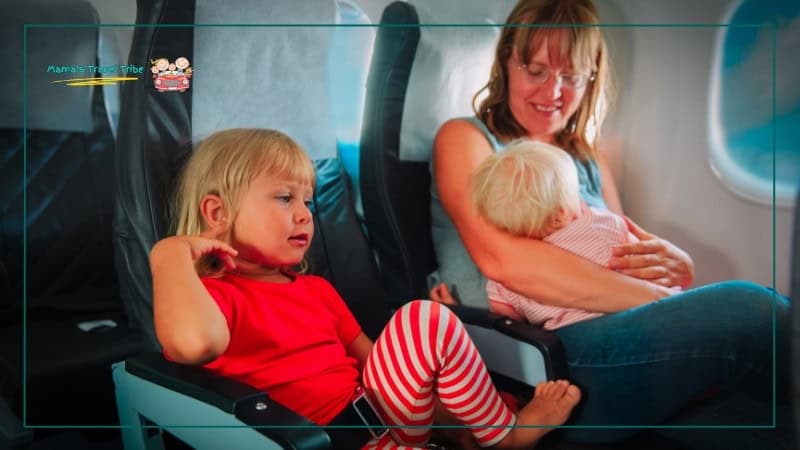
Babies need less entertainment than toddlers, but they need more physical help. Comfort on a flight usually comes down to a short list: feeding, holding, diaper changes, temperature, and sleep. If those basics are handled in a steady way, the flight is often manageable even when it is not smooth.
This section is for baby-specific cabin problems, which are different from the ones that show up with older toddlers. A baby may not fight boredom the same way, but a tired, hungry, overstimulated baby can still make a flight feel long fast.
A simple comfort map:
| Baby issue | What usually helps first |
| Hunger or fussing | feeding, burping, quieter holding position |
| Overtiredness | lower stimulation, familiar sleep cue, holding |
| Diaper discomfort | quick change plan, easy-access diaper kit |
| Too warm or too cool | adjust one layer, not the whole outfit at once |
| General cabin stress | reduce noise and movement around the baby |
Holding and feeding without making the flight harder
Holding a baby on a plane sounds straightforward until you add snacks, tray tables, cramped arm space, and a long stretch without a real break. The easiest approach is to stop trying to do too much at once. Feed first, settle second, and keep the seat area simple.
Parents flying with a baby usually do better with one stable holding position they can return to. That might be feeding in arms, then shifting into a calmer resting hold once the baby settles. Repositioning constantly often makes a tired baby more frustrated.
A few small choices help:
- keep the next feeding item within reach
- burp cloths should be easy to grab, not packed deep
- do not open extra supplies until you need them
- try one comfort move at a time before switching to the next
Diaper changes in a tight space
Plane diaper changes are inconvenient, but they get easier when the changing setup is small. A full diaper bag is too much for a tiny airplane bathroom. What works better is a compact kit you can grab in one motion.
That kit usually needs:
- one diaper
- a few wipes
- a slim changing pad
- one cleanup or disposal bag
For flying with baby first time, this is one of the easiest changes to make before the trip. Parents often pack enough diaper supplies but not in a way that works in the cabin. The smaller the changing setup, the less stressful the bathroom trip tends to be.
It also helps to change the baby before boarding when possible. That does not prevent every in-flight change, but it can give you a better starting point.
Managing naps on the plane
Plane naps are often lighter than home naps. Some babies sleep well with motion and noise. Others fight sleep because the cabin is bright, active, and full of interruptions. The best plan is usually to aim for rest and accept that the nap may not look normal.
For air travel with kids under one, naps usually go better when parents keep the setup familiar:
- same pacifier if used
- same sleep cloth or small comfort cue if already part of home sleep
- lower light around the baby as much as possible
- fewer handoffs and less stimulation once sleep starts trying to happen
The flight does not need to produce a perfect nap. A shorter nap can still help the rest of the day.
When bassinets help and when they do not
Bassinets help most on long flights with younger babies who still fit the airline’s limits and can settle in that type of sleep space. They are useful because they give parents a break from holding and may give the baby a flatter place to rest.
They help less when:
- the baby is already too big for the setup
- the baby only settles in arms
- the flight is short enough that the setup barely matters
- the seat arrangement makes access harder than expected
A bassinet is worth considering on long-haul flying with a baby, but it is not a guaranteed sleep solution. It is one tool. It works best when the baby already tolerates being set down and the parents have realistic expectations.
Temperature, layers, and seat comfort
Cabin temperature can shift during a flight, and babies feel that faster than adults. The easiest way to manage it is with layers that can be changed one at a time. One thicker outfit can be harder to adjust than two lighter layers.
A practical flight clothing setup usually works better than a cute one:
- soft base layer
- one easy extra layer
- socks if useful for your child
- one backup outfit in the carry-on in case of spills or leaks
Parents flying with a baby often make life easier by dressing the child for adjustment, not for the airport photo. Comfort matters more than the outfit once the flight starts.
What to do with an overtired baby in the air
An overtired baby is usually harder to help because they may reject the same things that normally work. Feeding may not settle them. Holding may not settle them right away either. The instinct is often to keep adding new fixes. That usually makes the moment busier, not easier.
A better order is:
- reduce stimulation
- try one known comfort method
- hold steady for a few minutes before switching
- keep your own movements slower than you want to
For flying with young children, adult pace matters. When the parent starts scrambling, the baby often gets more worked up. A steady response usually works better than a creative one.
Baby comfort quick check:
| If the baby is… | Check this first |
| crying suddenly | diaper, feeding timing, temperature |
| arching or fighting the hold | burping, position, overstimulation |
| rubbing eyes or zoning out | nap window, reduce interaction |
| calm but restless | layer comfort, small reposition, quiet hold |
How to keep a toddler occupied on the plane
Toddlers rarely need one brilliant activity. They need pacing. A flight usually gets easier when parents think in short blocks instead of trying to fill the whole trip at once. Snacks buy one stretch. A small activity buys another. A screen helps later. A bathroom break or aisle walk, when allowed, resets the mood again. That rhythm matters more than the size of the toy bag.
This section is where flying with a toddler becomes its own category. Babies often need comfort and care. Toddlers need occupation, limits, movement, and a steady hand when boredom turns into frustration.
A simple in-seat rhythm helps:
| Flight stage | What often works best |
| First 20 to 30 minutes after takeoff | one familiar snack or one easy activity |
| Middle stretch | rotate activities in short rounds |
| Restless phase | change the input, not the whole plan |
| Later hard stretch | bring in stronger tools like screens or a saved snack |
| Near descent | keep it simple again |
Using snack pacing to buy time
Snacks work well on planes because they do two jobs at once. They help with hunger and they give a toddler something clear to do. The mistake is using all the snacks too early or handing over too much at once. A better approach is to treat snacks in rounds.
A useful structure looks like this:
- one small snack after takeoff
- one slower snack for the middle stretch
- one more filling option if the flight runs long
- one emergency backup snack you do not touch unless you need it
Parents flying with kids often do better when they portion snacks before leaving home instead of managing large bags in the seat. Smaller portions feel easier to serve, easier to clean up, and easier to hold back for later.
Rotating activities before boredom hits
The best time to change activities is before the toddler is fully done. Once the child is already frustrated, the next activity has to work harder. On a plane, short rotations usually go better than long ones.
That means:
- do not bring out the full activity kit at once
- use one item at a time
- put things away while they still have some value
- keep one or two better items hidden for later
If you want more specific ideas for this stage, plane activities for a 1-year-old is one of the most useful supporting guides on the site. The age in the title is younger, but many of the same ideas still work well for toddlers because the real issue is short attention span in a tight space.
Low-mess toys that work in a small space
The best plane toys are quiet, compact, and easy to manage when they get dropped. The worst ones are noisy, made of many tiny pieces, or impossible to reset once they scatter under the seat. Plane travel with toddlers usually goes better when the toy choice respects the space.
A strong small-space activity kit often includes:
- one simple book
- one mess-free drawing or sticker option
- one hands-on toy with only a few pieces
- one familiar item from home that already holds attention
A quick test helps here: if the toy would be annoying to recover in a dark row during descent, it is probably not the best flight toy.
How to use screens without making the flight harder
Screens help many families. The problem is not using them. The problem is using them without a plan. If the screen comes out the second your child sits down, you lose one of your strongest tools before the hardest part of the flight even starts.
For airport tips for toddlers and in-flight survival, screens usually work best when:
- they are downloaded and ready before the airport
- they come out after simpler tools stop working well
- they are used in defined stretches, not as the first move
- the child already knows how to use the setup
A practical screen plan:
| Screen timing | When it makes the most sense |
| Not at the gate yet | Save it if the child is still managing with movement or snacks |
| After takeoff settles | Good if the toddler is starting to lose patience |
| Mid-flight hard patch | Often the best time to use it |
| Very end of the flight | Useful if you still need one last calm stretch |
Movement breaks when they are allowed
Toddlers often need to move more than adults expect, especially after the novelty of the flight wears off. Once the seatbelt sign is off and the aisle is clear enough, a short walk can help reset the whole mood. It does not need to become a long wandering session. Even a brief change in body position can help.
Movement breaks work best when:
- the child is restless, not fully melting down yet
- the parent keeps the walk short and calm
- you use the break to reset, not to excite the child more
For flying with young children, movement is often more effective than opening another toy. It meets the actual need instead of layering on more stimulation.
Boredom vs overstimulation on a plane
Not every fussy toddler is bored. Some are overloaded. That matters because the fix is different. A bored child may need a new activity, snack, or small task. An overstimulated child may need fewer inputs, a comfort item, a cuddle, and less noise from the parent.
A simple check helps:
| If the toddler seems… | The problem may be… | Better first move |
| restless and seeking things | boredom | new activity, snack, short task |
| noisy, tearful, rejecting everything | overstimulation | reduce options, comfort item, calmer voice |
| wild after too many tools | too much input | put most items away and reset |
This is one reason rotating too fast can backfire. The goal is not constant novelty. It is giving the child enough to do without turning the seat into chaos.
What to do when nothing seems to work
Most parents hit this point on some flight. The snacks are not helping. The activity is over. The screen is not landing. The child is tired, loud, or furious. When that happens, the best move is usually to narrow the moment down instead of trying five new tricks in a row.
A steadier reset often works better:
- stop opening new items
- lower your voice
- remove extra choices
- offer one familiar comfort or one plain snack
- wait a minute longer than you want to before changing course again
For flying with a toddler, this stage is often less about finding the perfect fix and more about not making the seat area more frantic than it already is. A rough ten minutes does not ruin the flight. Panic and overreaction usually make it feel longer.
Toddler in-seat reset:
| Problem | First reset |
| throwing items | remove extras, keep one object only |
| refusing every activity | stop rotating, use comfort and quiet |
| getting loud and physical | short walk if allowed, otherwise reduce stimulation |
| crying from tiredness | comfort item, cuddle, lower expectations |
| angry after delay or missed nap | snack, simple routine, one calm parent response |
Sleep on flights: naps, bedtime, and overnight travel
Sleep on a plane is rarely neat. It is broken by boarding, engine noise, seatbelt phases, lights, meal service, and the simple fact that the child is trying to rest in a seat instead of a bed. Parents do better when they stop measuring success against home sleep and start thinking in smaller goals: some rest, one decent nap, one calmer stretch, one less overtired landing.
For flying with kids, sleep planning is less about making the cabin feel perfect and more about deciding what level of rest is realistic for this flight.
A simple sleep frame:
| Flight type | Better expectation |
| Short daytime flight | brief nap or quiet rest |
| Longer daytime flight | one decent sleep stretch if timing lines up |
| Evening flight | partial sleep, not always bedtime-quality sleep |
| Overnight flight | some real sleep is possible, but rarely normal sleep |
Should you aim for naps or full sleep
Most flights work better when you aim for the kind of sleep the route can actually support. On a short daytime flight, a real nap may happen, but quiet rest is often the more useful goal. On a longer or overnight flight, parents may have a better shot at a deeper sleep stretch, especially if the child has their own seat or a setup that supports lying down more comfortably.
This matters because parents often push too hard for full sleep on flights that are not really built for it. That can make the whole cabin stretch feel tense. A toddler who rests quietly with a comfort item and a screen off for thirty minutes may still land in much better shape than a toddler who never settles at all.
A quick guide:
- short flight: aim for calm, not perfect sleep
- nap-time flight: aim for one useful rest stretch
- evening flight: expect tiredness, but not always easy sleep
- overnight flight: give sleep the best setup you can, then adjust as needed
What a realistic long-haul sleep setup looks like
Long-haul flights change the sleep question because there is enough time for real rest to matter. The setup still depends on age. A younger baby may sleep in arms, in a bassinet if available, or in a familiar feeding-to-sleep rhythm. A toddler or preschooler often needs more structure, more space, and lower stimulation.
A workable long-haul setup usually includes:
- one familiar sleep item
- one extra layer in case the cabin cools down
- a simple snack or drink plan before sleep
- seat access that does not require constant unpacking
- a parent expectation that the sleep may still be broken
If you are planning around in-seat sleep for an older child, how to make a bed on a plane is the most direct supporting guide for that part of the setup.
Parent expectations for in-flight sleep
This part matters more than parents expect. A child may sleep less than normal, wake more often, resist settling, or wake fully during turbulence, announcements, or meal service. None of that means the sleep plan failed. It means the child is sleeping on a plane.
For family air travel, the more realistic expectation is usually:
- some sleep instead of perfect sleep
- a later bedtime instead of the normal bedtime
- a rough wake-up instead of a neat transition
- extra tiredness after landing instead of a fully rested child
That sounds obvious on paper, but it changes how parents pack and respond. When the goal is realistic rest, you make better choices than when the goal is a normal night in abnormal conditions.
Which comfort items are worth bringing
Comfort items help most when they already mean something to the child. A blanket they never use at home is not likely to become the answer at 30,000 feet. A sleep item they already rely on may help a lot because it keeps one part of the bedtime pattern familiar.
The most useful comfort items are usually:
- pacifier if already used
- one small blanket or lovey if already part of sleep
- one familiar stuffed item for older toddlers
- one layer or sleep piece that feels like home
For flying with a toddler, the best comfort item is often the one that helps them settle without turning into a game.
Should you change kids into pajamas
Pajamas help some children because they signal that sleep is next. They help less when changing clothes in the seat turns into a whole new problem. The better question is whether pajamas make the child more comfortable and more likely to settle on this specific flight.
Pajamas often make sense when:
- the flight is overnight
- the child already uses pajamas as a strong sleep cue
- the child has their own seat or a calm enough moment to change easily
They make less sense when:
- the flight is short
- the child is likely to resist changing
- the seat area is already chaotic
- the clothing they are wearing is already soft and sleep-friendly
A simple compromise works for many families: dress the child in soft travel clothes that can pass for sleep clothes if needed.
When an inflatable bed or sleep setup makes sense
These setups matter most on long flights with older toddlers or preschoolers who have their own seat and are likely to sleep better with leg support or a flatter rest position. They matter much less on short flights, flights with lap infants, or trips where the child rarely sleeps well outside a crib or bed anyway.
Before relying on one, parents should think through:
- whether the airline allows the setup
- whether the child has their own seat
- whether the child is likely to sleep enough for the setup to matter
- whether carrying the extra gear is worth it for this route
This is one of those choices that can help a lot for the right child and barely matter for the wrong one.
What to do when your child does not sleep at all
Sometimes the sleep plan does not land. The child is too wired, too curious, too uncomfortable, or too far off schedule. At that point, chasing sleep harder often makes things worse. A better move is to shift the goal from sleep to containment and calm.
That usually means:
- stop trying to force a full sleep routine
- lower stimulation
- offer one comfort item or one quiet activity
- keep food and drinks steady
- plan for the arrival to be softer because the child will likely be tired
For plane travel with toddlers, this shift matters a lot. A child who never sleeps may still handle the flight and landing better if the parent stops treating sleep as the only path to a decent outcome.
Sleep check:
| If the child is… | Better goal |
| yawning but alert | quiet rest first |
| overtired and resisting | comfort and low stimulation |
| asleep lightly | protect the sleep instead of adjusting too much |
| wide awake late in the flight | stop chasing full sleep and manage the landing plan |
Food, bottles, snacks, and hydration during flights
Food issues on flights are rarely just about food. They usually show up as timing problems, regulation problems, and comfort problems. A child who is hungry, thirsty, off schedule, or eating in a cramped seat can move from fine to miserable fast. For flying with kids, the best setup is usually the simplest one: familiar foods, a clear feeding plan, and enough built-in backup that one delay does not throw the whole day off.
The goal is not to feed perfectly in the air. It is to avoid the common problems that make the cabin feel harder than it needs to.
A simple flight-feeding frame:
| Flight food issue | Better first move |
| Baby needs a feed during a busy phase | Keep the next feed easy to reach and easy to prep |
| Toddler gets hungry during waiting | Use a small snack early, not the whole food supply |
| Child is tired and refusing food | Switch to the most familiar option |
| Parent forgets hydration | Keep one drink routine for the adult too |
| Cabin gets messy fast | Use low-mess food first and save riskier items for later if needed |
Breastfeeding on flights
Breastfeeding on a flight usually works best when the setup is simple. Parents flying with a baby do not need a perfect cabin situation. They need enough space, a manageable hold, and a little patience if the baby is distracted or overtired. Some babies feed well during takeoff or landing. Others latch better once the cabin settles.
A few practical points help:
- wear something that makes feeding easy without a long setup
- keep one burp cloth close
- do not wait until the baby is fully frantic if feeding is likely to help
- expect some feeds to be shorter or more distracted than they are at home
Flight days can shift normal feeding patterns. Some babies feed more often for comfort. Some feed in shorter rounds because there is more noise and movement around them.
Here are some helpful recommendations by the CDC for breastfeeding mothers.
Formula prep in transit
Formula feeding usually goes better when the whole system is packed as one unit instead of scattered through the carry-on. Parents flying with a baby should know where the next bottle, the formula, the water plan, and the cleanup supplies are before boarding starts.
The easiest formula setup is usually:
- one feeding round ready first
- the next round packed directly behind it
- bib or cloth packed with the bottle setup
- wipes or cleanup supplies in the same section
This matters because delays change feeding timing. A setup that works for the scheduled flight should also work if boarding runs late or the plane sits longer than expected.
Building a toddler snack structure that lasts
Toddlers do better with a snack structure than with one large bag of food handed over all at once. On a flight, snacks are part of the pacing system. They fill hunger, but they also break up time, support takeoff and landing, and help with the long middle stretch when boredom and fatigue start mixing together.
A useful snack structure looks like this:
| Snack round | Best use |
| First small snack | After takeoff or during early waiting |
| Slower snack | Middle stretch when the child needs a task as much as food |
| Filling snack | When a meal is delayed or the flight runs long |
| Backup snack | Saved for the hard patch later |
Parents flying with a toddler usually get better results from small portions and clear timing than from letting the child graze through the whole bag in the first hour.
Which foods are too messy for a plane
Mess-heavy foods are not always bad foods. They are just bad plane foods. Anything sticky, crumb-heavy, hard to clean, strongly scented, or likely to spill across the tray and seat tends to create more work than it is worth. This is especially true in air travel with kids because cleanup options are limited and the row gets cluttered fast.
Plane-friendly food usually has three traits:
- easy to hand over in small amounts
- easy to clean off fingers and seats
- familiar enough that the child will actually eat it
If the food is likely to roll, smear, leak, or crumble everywhere, it is probably better saved for the airport or after landing.
Hydration reminders parents forget
Hydration slips because parents are busy managing everything else. They remember wipes, snacks, boarding, seatbelts, and the tablet. They forget that the child has not had much to drink in a while, or that they have not either. For flying with young children, that small oversight can make the whole cabin stretch feel harder.
A plain hydration pattern helps:
- offer drinks at natural transition points
- give the child a chance to drink before they look worn down
- keep the adult’s water routine going too
- do not rely on one big drink late in the flight
This matters more on long travel days than on the flight alone. By the time a child seems off, part of the issue may simply be that the day has run long and intake has slipped.
Preventing hunger-triggered meltdowns
Most hunger meltdowns on flights are timing failures, not food failures. The parent packed enough food, but the useful snack was buried, the child got too tired before eating, or the day stretched longer than expected. The easiest fix is to offer food a little earlier than feels necessary, especially before boarding, before descent, or right when a delay starts.
A practical hunger-prevention checklist:
- keep one easy snack outside the main stash
- do not save all the filling food for later
- use familiar foods first when the child is overtired
- watch the gap between airport food and in-flight food, because that is where many problems start
For plane travel with toddlers, hunger and boredom often look alike at first. A good snack plan helps with both.
Conclusion
Flying with kids usually feels hardest when too many small decisions are left for the airport or the plane. The families who have a smoother day are usually the ones who simplify the route, pack the carry-on around real problems, protect food and rest, and make fewer assumptions about how the flight will go.
If there is one useful way to think about family air travel, it is this: the best flight is rarely the cheapest or the most convenient on paper. It is the one your child can actually get through without the day falling apart around them. Start with the booking, keep the setup practical, and solve the next problem before it becomes the current one.
Quick takeaways
- Choose the flight for your child’s schedule, not just the fare
- Pack the carry-on for delays, mess, hunger, and tiredness
- Use airport time to set up the flight, not wear everyone out
- Keep in-flight plans simple and rotate food, activities, and rest
- Focus on a manageable day, not a perfect one