

Child travel documents get confusing fast because the answer changes with the trip. A domestic flight, an international flight, a cruise, and a trip with only one parent can all lead to different paperwork questions. Add in lap infant rules, passport rules, consent letters, and name mismatches, and it is easy to feel like you need three different answers for one child.
This guide pulls the main document questions into one place. It covers passports, birth certificates, proof of age, consent paperwork, cruise documents, and the situations where families are more likely to get asked for extra support at check-in or at the border.
The goal is simple: help you figure out what to gather before the trip, what to keep in the carry-on, and what to double-check before you leave home.
What Child Travel Documents are required for travelling?
Child travel documents depend on where your child is going, how they are traveling, and who they are traveling with. For domestic U.S. flights, children usually do not need standard ID, but proof of age can still help. For international travel, children need their own passport and may also need visas or consent paperwork depending on the trip.
Why child travel documents confuse so many parents
Questions about child travel documents get messy because parents are usually dealing with more than one rule at once. A domestic flight, an international flight, a cruise, and a trip with only one parent can all lead to different document checks. Some of those checks come from the government. Some come from the airline or cruise line. Some are not strictly required but still useful when an agent wants proof of age or a parent-child connection. That is why one family can fly without showing much at all while another gets asked for paperwork at the counter. For a broader flight-specific overview, your own guide on what documents kids need to fly works well as a companion to this page. TSA says children under 18 do not need ID for domestic U.S. flights, but that rule does not settle every airline or age-verification question on its own.
A second reason this confuses parents is that the practical question is usually not “What is the minimum rule?” It is “What do I need in my bag so this trip does not get stuck at check-in?” That is why over-preparing usually works better than under-preparing in document-heavy travel situations. A birth certificate may not be mandatory in every domestic case, but it can still solve a proof-of-age problem fast. A consent letter may not be checked on every one-parent trip, but it can still reduce friction at a border or with a travel provider. CBP says children traveling internationally need their own passport, visa, or other required entry documents, and it notes that some countries may ask for a notarized letter if a child is traveling with only one parent or without both parents.
If this is your first time traveling with a baby and a toddler, check out my detailed guide here.
Why domestic and international travel follow different rules
Domestic and international trips start from different document baselines. In the United States, TSA does not require children under 18 to show identification for domestic air travel. That often leads parents to assume kids do not really need documents for flights. The problem is that this only answers one narrow part of the trip. Airlines may still ask for proof of age for a lap infant or a child close to an age cutoff, and adults still need their own acceptable ID to travel. On international routes, the question changes completely. Children need their own passport, and they may also need visas or other country-specific entry documents depending on the destination. The U.S. Department of State’s child passport guidance and CBP’s international travel guidance are the two official sources parents should keep in view here.
That gap between domestic and international rules is one reason parents search terms like does my child need a passport to travel or documents needed for child travel and find mixed answers. They are often reading advice written for a different route, a different age, or a different travel mode. A child who does not need standard ID for a U.S. domestic flight may still need proof of age. That same child will need a passport for international air travel. For parents who are stuck on the domestic side of the question, read my article on does my child need a birth certificate to fly domestic.
Why airline rules and government rules do not always answer the same question
Government rules tell you what the law or border process requires. Airline rules often deal with ticketing, lap infant status, check-in, baggage, and who can board under a given booking setup. Those are related, but they are not the same thing. A parent may read that TSA does not require ID from minors for domestic flights and still get asked by an airline to show proof of age for a baby flying as a lap infant. That does not mean TSA changed the rule. It means the airline is asking a different question.
The same split shows up with passports. The State Department sets out what is needed to apply for a child’s passport, including Form DS-11, evidence of citizenship, evidence of relationship, parental consent, and photo ID from the parent or guardian. A cruise line or airline may then add its own layer around check-in deadlines, matching names, or route-specific document checks. For children under 16, the State Department says both parents or guardians must approve the passport application and appear with the child, unless extra documents are provided to cover an absent parent or another custody situation.
Flights can be stressful. Read our detailed guide on what you need to know when flying with kids before you book your flight.
Why proof-of-age questions come up more often than parents expect
Proof-of-age issues show up because age changes the travel setup for children more than it does for adults. The most common example is the lap infant rule. A baby under the airline’s cutoff may be allowed to fly in an adult’s lap. A child over that cutoff needs their own seat. That makes age verification a practical issue at the counter, even on domestic trips where minors do not need standard ID for TSA screening. This is one reason parents search phrases like proof of age for flying with baby or does my child need a birth certificate to fly before domestic travel. Your article on does my child need a birth certificate to fly domestic fits right into this question.
A simple way to think about it:
| Situation | Why proof of age matters |
| Lap infant on a domestic flight | Airline may want to confirm the child is under the lap infant age limit |
| Child close to age 2 | Airline may need to confirm whether a separate seat is required |
| Child fare or age-based booking issue | Age can affect the ticket category |
| Cruise boarding for young children | Travel provider may ask for age-linked identity proof |
Parents often assume the age question only matters if someone looks doubtful. In practice, it matters whenever the booking depends on age.
Why over-preparing usually works better than under-preparing
When it comes to travel documents for minors, carrying one useful extra document is usually easier than trying to solve a question in the airport, at the cruise terminal, or at a border checkpoint. That does not mean families need thick folders full of random paperwork. It means the main identity and relationship documents should be easy to reach, with at least one backup copy if the trip has more moving parts.
The State Department’s child passport process is a good example of why document prep rewards early work. For a child under 16, parents need citizenship evidence, relationship evidence, parental consent, a passport photo, and the DS-11 application. If a parent is missing from the process, additional paperwork may be needed. These are not things most families can fix on the way to the airport.
A practical prep mindset:
| Better approach | Why it helps |
| Carry one strong proof-of-age document | Solves airline questions fast |
| Keep passport and backup copies together | Reduces last-minute searching |
| Bring consent paperwork when the trip could raise questions | Lowers friction in one-parent or guardian travel |
| Recheck airline, cruise line, and border rules before departure | Avoids relying on generic advice for a specific trip |
Why “not required” does not always mean “not useful”
This is where parents get tripped up most often. A document can be unnecessary in the strict legal sense and still very useful in practice. TSA’s domestic rule for minors under 18 is a good example. Children usually do not need to present standard identification for domestic U.S. air travel. That does not mean parents should travel with nothing that proves the child’s age or connection to the adult when those details are likely to matter for the booking or the route.
The same logic applies to one-parent and non-parent travel. CBP notes that while children traveling internationally need their own passport and other required entry documents, some countries may ask for a notarized letter from the absent parent or parents. That does not mean every family will be asked. It means the document may still be smart to carry when the trip setup makes the question foreseeable.
A useful rule of thumb:
| Document status | What it really means |
| Required | The trip may not work without it |
| Not required | You may still want it if it solves a predictable question |
| Rarely asked for | Still worth carrying if your situation makes it relevant |
| Airline or cruise specific | Needs a direct check with that provider |
The main types of child travel documents parents should know
Before sorting out one specific trip, it helps to know the core document categories. Most parents are not dealing with ten different kinds of paperwork. They are usually dealing with a small set of documents that get reused in different ways depending on whether the trip is domestic, international, cruise-based, or involves only one parent or another guardian.
This section is the base layer for the rest of the guide. The point is to separate the documents by what they actually do, so you can tell the difference between identity proof, age proof, travel permission, and simple trip backup.
A quick overview:
| Document type | What it usually solves |
| Passport | International identity and travel authorization |
| Birth certificate | Proof of age, proof of citizenship in some cases, relationship backup |
| School ID | Limited identity support for some older minors |
| Consent letter or custody paperwork | Permission and authority questions |
| Booking copies | Practical check-in and itinerary support |
What a passport covers
A passport is the main document for international child travel. If your child is flying internationally, they need their own passport, even if they are a baby and even if they are sitting in a parent’s lap. For children under 16, the U.S. Department of State says the application process requires Form DS-11, evidence of U.S. citizenship, evidence of the parent-child relationship, and parental consent. That is the official starting point for passport for baby travel and for older minors too.
A passport also works as one of the clearest forms of identity and age proof for children. That matters because parents often search does my child need a passport to travel when the real issue is broader than just flights. A passport can cover international air travel, many border situations, and some cruise scenarios where it is the safer option even if another document might sometimes be accepted.
A simple passport view:
| Trip type | Does a passport usually cover it? |
| Domestic U.S. flight | Usually not needed for the child |
| International flight | Yes |
| Cruise | Sometimes required, sometimes strongly recommended |
| Proof of age backup | Yes, if you already have it |
If the trip includes a cruise read this do babies need passport to go on cruise.
When a birth certificate matters
A birth certificate is usually the most useful non-passport document for child travel. It often comes up in domestic flight questions because parents want to know whether their child needs ID, and the answer is usually more about proof of age than about standard identification. TSA says children under 18 do not need ID for domestic U.S. flights, but airlines may still ask age-related questions, especially for lap infants. That is where a birth certificate becomes useful even when it is not strictly required by TSA.
A birth certificate can help with:
- proof of age for a lap infant
- age disputes at the airline counter
- some cruise situations
- backup proof of relationship in edge cases
When a school ID may help
A school ID is not the main document for young children, and it does not replace a passport or a birth certificate. It can still help in a smaller set of situations, mostly with older minors, teen travelers, or travel-provider checks where an extra piece of identifying information makes the process easier.
The safest way to think about a school ID is as supporting proof, not primary proof. It may help show the child’s name and give an extra layer of identity if a teen is flying without parents or checking in for a trip where a staff member wants another matching document. It is less useful for babies, toddlers, and most proof-of-age questions.
A simple ranking helps:
| Document | Strong for child travel? | Best use |
| Passport | Yes | International travel and identity |
| Birth certificate | Yes | Proof of age and some citizenship questions |
| School ID | Limited | Older minor support or extra backup |
What documents do kids need for domestic flights
Domestic flight rules are where parents get the most mixed answers. In the United States, TSA says children under 18 do not need identification for domestic air travel. That is the part most people hear first. What creates confusion is that airline staff may still ask age-related questions, especially for lap infants, and the adult traveling with the child still needs their own acceptable ID. So the practical answer is often wider than the TSA answer. For the official TSA rule, this page is the main reference: Do minors need identification to travel?.
This is why parents searching what documents do kids need to fly often end up confused by two different questions:
- what TSA requires from the child
- what the airline may ask for at check-in
A simple domestic-flight view:
| Domestic travel question | What usually matters |
| TSA ID for child under 18 | Usually not required |
| Proof of age for lap infant | Often useful, sometimes asked for |
| Adult traveling with child | Adult still needs valid ID |
| Different last names or edge cases | Backup paperwork can still help |
If you want the narrower flight-specific version of this topic, read what documents kids need to fly
When children usually do not need standard ID for U.S. domestic flights
For a routine domestic U.S. flight, children under 18 usually do not need to show standard identification at the TSA checkpoint when they are traveling with an adult. That is the plain answer. TSA puts that directly in its guidance for minors.
That does not mean families should assume no documents matter at all. It only means the child usually is not expected to present the same kind of ID an adult would present at security. A lot of the confusion comes from parents hearing “kids do not need ID” and reading that as “I do not need to bring anything for my child.” On many trips, that will still work. On some trips, especially with babies and toddlers, it can create unnecessary friction at the airline counter.
When airlines may still ask for proof of age
Airlines often care about age when the booking depends on it. The clearest example is a lap infant. If the child is flying without their own seat, the airline may want proof that the child is under the age limit for that booking. This is one of the most common reasons parents bring a birth certificate on a domestic trip even though TSA does not require child ID.
This matters most when:
- the child is a lap infant
- the child is close to age two
- the child looks older than the booking category suggests
- the booking has an age-based fare issue
What the adult traveling with the child still needs to carry
Even when the child does not need standard ID, the adult does. TSA’s rule for minors does not replace the identification requirement for the adult traveler. That part stays the same. The adult should also be the one carrying the child’s supporting paperwork if the airline asks for proof of age or if the trip has a detail that could raise a question, like a one-parent booking or a different last name.
A simple domestic folder for the adult often includes:
| Item | Why to carry it |
| Adult photo ID | Needed for TSA screening |
| Child proof-of-age document | Useful for lap infant or age questions |
| Booking confirmation | Helps with counter or gate issues |
| Backup copy on phone | Useful if the paper copy is misplaced |
Does a child need a birth certificate to fly domestically
This is one of those travel questions that sounds like it should have a clean yes-or-no answer, and it usually does not. For most domestic U.S. flights, TSA does not require children under 18 to show identification. Still, a birth certificate can make life a lot easier when an airline wants proof of age for a lap infant or when something at the counter needs to be cleared up fast. That is why so many parents keep one in the travel folder even on a simple domestic trip. TSA’s domestic minors guidance is the official starting point here.
I look at it this way: a birth certificate is often less about formal TSA screening and more about avoiding an unnecessary argument when you are already juggling bags, snacks, and a tired child.
A quick reality check:
| Situation | Is a birth certificate usually legally required? | Is it still useful? |
| Domestic flight with a ticketed child | Usually no | Sometimes |
| Domestic flight with a lap infant | Not always | Very often |
| Child close to age 2 | Not always | Yes |
| Different last names or a counter question | Not always | Yes |
When it may be requested
The most common time a birth certificate comes up is when the airline wants to confirm a child’s age. That usually means a lap infant booking. If a baby is flying without their own seat, the airline may want proof that the child is under the allowed age for that setup. This is where proof of age for flying with baby becomes the real issue, not general child ID.
It can also come up when:
- a child is close to their second birthday
- the airline agent wants to confirm the booking category
- the child looks older than expected for a lap infant fare
That does not mean every counter agent will ask. It means the question is common enough that a birth certificate is still one of the smartest papers to carry on a domestic trip with a baby or toddler.
Why many parents still carry it anyway
A lot of parents carry the birth certificate because it is easy insurance. Domestic travel with children is full of moments where nobody is saying your child needs formal ID, but one document can settle a question in seconds. When the choice is between bringing one extra paper and trying to sort out an age dispute at check-in, most of us would rather just have the paper.
This matters even more when:
- the child is a lap infant
- the family has a tight flight schedule
- one parent is traveling alone
- the airline counter is busy and not very patient
Digital copy vs original copy
A phone scan is better than nothing, but it is not the version I would rely on if you already have access to a physical copy. The U.S. Department of State makes this distinction clearly in the passport process: digital citizenship evidence is not accepted in place of physical evidence. That is a passport rule, not an airline rule, but it is still a good reminder that a real paper document tends to carry more weight when an agent wants to see proof.
My practical order is simple:
| Version | Best use |
| Certified or original copy | Strongest option if someone asks |
| Printed photocopy | Good backup if you do not want to carry the original everywhere |
| Phone scan | Last-layer backup |
For domestic flights, a printed copy is often enough to make the day easier. The point is to have something clear, readable, and easy to pull out when you need it.
What counts as proof of age for a baby or toddler
This is where a lot of parents get stuck, especially with lap infants. The question usually is not whether a baby has formal ID. The question is whether you have something clear enough to show the child’s date of birth if an airline asks. For most families, the best proof-of-age document is a birth certificate or a passport. Those are the two documents that answer the question quickly without much back-and-forth.
I keep this simple. If the trip setup depends on your child being under a certain age, I want one document in my carry-on that proves it.
| Document | Strong proof of age? | Best use |
| Birth certificate | Yes | Domestic flights, lap infant questions, backup documentation |
| Passport | Yes | International travel, domestic backup, cruise travel |
| Immunization record | Sometimes | Backup only if better documents are not available |
| Hospital paperwork | Sometimes | Backup only, not first choice |
Why proof of age matters most for lap infants
Proof of age matters most when age changes the booking. A lap infant is the clearest example. If a child is flying without their own seat, the airline may want to confirm that the child is still under the allowed age for lap travel. This is why parents search terms like proof of age for flying with baby before what looks like a simple domestic trip.
The closer a child is to age two, the more useful it is to have that document ready without digging for it.
When a birth certificate works best
A birth certificate is usually the easiest proof-of-age document for domestic travel. It is familiar, direct, and tied to the exact question the airline may ask. For a lot of parents, this is the paper that stays in the travel folder because it solves the most common age issue without adding much work.
It is especially helpful when:
- your baby is a lap infant
- your toddler is close to turning two
- you want a clear backup on a domestic trip
- you are not already carrying a passport for the child
When a passport works as proof of age
A passport also works as proof of age, and it is often the better document if your child already has one for international travel or cruise travel. It covers age and identity in one place, which makes it useful beyond the airport too. The main drawback is that some parents would rather not carry the passport on a simple domestic trip if a birth certificate will do the job just as well.
What documents kids need for international flights
International travel is where the document list gets stricter fast. A child who can board a domestic flight without a standard ID still needs their own passport for international air travel. Depending on the destination, they may also need a visa, travel authorization, or extra paperwork tied to the country’s entry rules.
This is the point where travel documents for minors stop being a casual packing question and start becoming a real pre-trip check. U.S. Customs and Border Protection says children need their own passport, visa, or other required international travel documents, just like adults do.
For most families, the safest way to think about this section is simple: do not treat “my child is little” as a shortcut. Age changes some domestic flight rules. It does not remove international passport rules.
A clean international checklist starts here:
| Document | Why it matters |
| Passport book | Required for international air travel |
| Visa or travel authorization | Required for some destinations |
| Booking details | Helps match names, routes, and onward travel |
| Consent paperwork if needed | Useful for one-parent or guardian travel |
| Backup copies | Helps if the main document is lost or questioned |
Why a passport is the starting point
If your child is flying internationally, the passport is the first thing to verify. It needs to belong to the child, match the booking exactly, and still be valid for the trip. The U.S. Department of State’s passport guidance for children under 16 makes this very clear: children need their own passport, and the application process requires citizenship evidence, proof of relationship, and parental consent.
This is also why parents search does my child need a passport to travel and get nervous fast. For international air travel, the answer is usually yes. For cruises and certain land or sea situations, the answer can get more nuanced, but for flights, the passport book is the core document.
When visas apply to children too
Visa rules do not disappear just because the traveler is a minor. If the destination requires a visa or other entry authorization, that requirement often applies to children too. This is where parents can get caught by reading broad family travel advice and missing the destination-specific part.
The practical rule is:
- check the destination’s official entry requirements
- check whether the child needs the same visa or authorization as the adult
- check whether the passport has enough validity left for that country’s rules
This is one of those places where guessing is risky. The State Department’s country information pages are the best official place to start before departure.
Why country-specific entry rules always need a final check
This is the part parents cannot outsource to one general blog post, including this one. Countries can have different passport-validity rules, visa rules, consent expectations for minors, and document checks tied to surname differences or one-parent travel. CBP also notes that some countries require a notarized letter from the other parent when a child is traveling internationally with only one parent.
My rule here is simple: once the trip is booked, do one final official check for the exact country and the exact travel setup. That matters even more if the child is traveling with one parent, grandparents, or another guardian.
When babies and toddlers need passports
This is one of the first places parents get tripped up, because the answer depends almost entirely on the kind of trip. For a domestic U.S. flight, a baby or toddler usually does not need a passport. For international air travel, they do. Age does not change that rule. A baby flying internationally needs the same basic travel document an adult does: their own passport. CBP says children must have their own passport, visa, or other required international entry documents when traveling to another country.
A quick breakdown:
| Travel type | Does a baby or toddler usually need a passport? |
| Domestic U.S. flight | Usually no |
| International flight | Yes |
| Cruise | Sometimes, depending on the itinerary |
| Land or sea border crossing | Depends on the route and citizenship rules |
Why domestic travel is a different question
Domestic travel works under a much lighter document standard for children. TSA says children under 18 do not need identification for domestic travel within the United States. That is why families often travel domestically with a birth certificate or no child ID at all, depending on the child’s age and ticket setup.
That said, domestic rules do not erase proof-of-age questions. If your child is flying as a lap infant or is close to an age cutoff, it still helps to carry a document that shows date of birth.
Parents trying to sort out that side of the question usually need what documents do kids need to fly and does my child need a birth certificate to fly domestically more than passport guidance.
Why international air travel does not care how young the child is
International flights are different. If the route is international, your child needs their own passport, even if they are a newborn and even if they are sitting in your lap. The U.S. Department of State’s under-16 passport process makes that clear through the application itself: parents must submit Form DS-11, evidence of citizenship, evidence of relationship, and parental consent for a child’s passport.
This is where searches like does my child need a passport to travel and passport for baby travel usually lead. The answer for international flights is straightforward: yes.
When cruises make the answer less simple
Cruises are where parents start seeing mixed answers. CBP says some U.S. citizen children under 16 may be able to present an original, notarized, or certified copy of a birth certificate, a Consular Report of Birth Abroad, or a Naturalization Certificate on certain cruise itineraries instead of a passport. That is why cruise questions need their own check.
The safer move for families is to separate the cruise question from the flight question. A child may be able to board a qualifying cruise with a birth certificate, but that does not mean the same document setup works if the trip also includes international flights. For that narrower issue, does a baby need a passport for a cruise is the right internal follow-up.
Passport cards vs passport books for family travel
This is one of those choices that feels small when you are applying and much bigger when the trip is getting close. A passport card is cheaper, and for the right kind of trip it can work fine. The problem is that it does not cover international air travel. A passport book does. For most families, that is the difference that matters.
The U.S. Department of State is very clear on this point: the passport card can be used for entry into the United States from Canada, Mexico, Bermuda, and some Caribbean countries at land border crossings or sea ports of entry. It cannot be used for international travel by air. The passport book works for international air, land, and sea travel.
A side-by-side view makes this easier:
| Document | International air travel | Land and sea travel from eligible locations |
| Passport card | No | Yes |
| Passport book | Yes | Yes |
The basic difference between the two
The passport card is a smaller, wallet-sized travel document. The passport book is the standard booklet most parents picture when they think about a passport. Both prove citizenship and identity, but they do not work the same way for travel.
For families, the simplest way to think about it is this:
- passport book = broader use
- passport card = narrower use
That is why the passport book usually makes more sense for documents needed for child travel, especially if future trips may include flights outside the United States.
Where a passport card works and where it does not
A passport card works for certain land and sea entries, mainly from Canada, Mexico, Bermuda, and some Caribbean countries. It does not work for international flights. That limitation matters more than parents expect because it means a trip that looks simple on paper can outgrow the card fast if the family ends up flying part of the route.
A quick route check:
| Travel scenario | Passport card enough? |
| International flight | No |
| Closed-loop cruise in a qualifying situation | Sometimes, but check carefully |
| Land crossing from Canada or Mexico | Often yes |
| Emergency flight home from abroad | No |
This is where cruise planning can create confusion. A family may book a cruise that seems to fit the passport-card logic, then add flights before or after. Once flights are part of the trip, the passport book is usually the safer document.
Why the passport book is usually the better choice for families
For most family travel, the passport book gives you more room to work with. It covers the trips you are planning and the changes you did not plan. If you need to fly internationally, reroute home, or turn a cruise trip into a flight-based trip because something changes, the passport book is the document that keeps working.
That is why I usually see the passport book as the better long-term choice for families with small kids. It is not about making things more complicated. It is about avoiding the narrow document that only works until the trip changes shape.
What children need for cruises
Cruise paperwork is where a lot of parents get thrown off, because the answer can change based on the itinerary, the child’s citizenship, and whether the trip includes flights before or after the cruise.
A child may be able to board one kind of cruise with a birth certificate and need a passport for another. That is why cruise documents need their own check instead of being lumped in with flight rules.
The official CBP cruise guidance is the starting point here, but it is not the only check. Cruise lines can have their own boarding rules, and those matter too.
A simple cruise breakdown:
| Cruise setup | What families should verify first |
| Closed-loop cruise from and back to the same U.S. port | Whether a birth certificate is accepted for the child |
| Cruise with foreign ports and added travel complexity | Whether a passport is the safer or required option |
| Cruise plus flights | Flight documents and cruise documents both need to work together |
| One-parent or guardian travel | Whether consent paperwork should be packed too |
What closed-loop cruise rules mean for families
Closed-loop cruises are the reason parents see mixed answers online. On some of these itineraries, U.S. citizen children under 16 may be able to use an original, notarized, or certified copy of a birth certificate, a Consular Report of Birth Abroad, or a Naturalization Certificate instead of a passport. CBP says that clearly in its cruise documentation guidance.
That does not mean every cruise works that way, and it does not mean a birth certificate is always the smartest option. It means some families can board certain cruises without a passport, as long as the itinerary and cruise line allow it.
A quick view:
| Child on a closed-loop cruise | Documents that may work |
| U.S. citizen under 16 | Birth certificate or similar citizenship proof in qualifying cases |
| Child on a more complex itinerary | Passport is more likely to matter |
| Family unsure about port rules | Check cruise line and official guidance before relying on a birth certificate alone |
When a passport is still the safer choice
Even when a birth certificate might technically work, a passport is often the better document to have. It gives the family more flexibility if something changes mid-trip. That matters if there is a medical issue, a missed sailing connection, or any reason the child may need to fly home from a foreign port. A passport book covers international air travel. A birth certificate does not.
This is also where parents usually start asking the narrower question: does a baby need a passport for a cruise. That article is the right next read when the family is trying to decide between the minimum document that may work and the stronger document that gives more room if the trip changes.
What changes if the family also flies before or after the cruise
This is the part families miss all the time. A child may have enough paperwork to board the cruise and still not have enough paperwork for the flights tied to that same trip. Once the itinerary includes international air travel, the cruise answer is no longer the whole answer.
That is why I always separate the cruise question into two parts:
- what the cruise line and cruise route accept
- what the flight part of the trip requires
If the family is flying internationally before or after the cruise, the passport question usually becomes much simpler: the child needs their own passport for the flight, even if the cruise alone might have been more flexible.
If this is your first family trip, check out our ultimate family travel packing list.
What if a child is traveling with only one parent
This is one of the situations where parents usually do have the right documents and still feel unsure. A child traveling with one parent may be completely fine with a passport and the usual booking documents. Even so, some trips raise extra questions, especially at international borders or when the parent and child have different last names.
CBP’s guidance is one of the clearest official references here. It says children traveling internationally should have their own passport and other required entry documents, and it notes that some countries require a notarized letter from the absent parent if the child is traveling with only one parent.
That does not mean every one-parent trip needs the exact same paperwork. It means this is the kind of travel setup where one extra document can save a lot of stress.
A simple one-parent travel check:
| Situation | What may help |
| International trip with one parent | Passport plus consent letter if relevant to the route |
| Different last names | Proof linking parent and child names |
| High-question border crossing or foreign entry point | Contact details and supporting paperwork |
| Domestic trip with no other concerns | Usually much lighter document needs |
When a consent letter may help
A consent letter is one of those documents families may never be asked for, but when it is needed, it matters fast. It is most relevant when a child is traveling internationally with only one parent or without both parents. Some countries expect it. Some border agents may ask for it if the travel setup suggests the question.
For traveling with a child without both parents, a consent letter is often the cleanest way to show that the other parent knows about the trip and agrees to it. It does not replace a passport. It supports the trip where permission becomes the issue.
A practical consent-letter packet often includes:
- the child’s full name
- the traveling parent’s name
- the non-traveling parent’s name and contact information
- basic trip details
- signature, and notarization if the destination or family situation makes that wise
What surname differences can change
Different last names do not automatically create a problem, but they can make questions more likely. A parent and child can absolutely travel together with different surnames. The issue is that name mismatch can make an agent look for one more piece of context, especially on international trips or one-parent itineraries.
This is where support documents help. Depending on the situation, that may mean:
- the child’s birth certificate
- court paperwork
- adoption records
- a legal name change document
The point is not to carry your whole family file. The point is to have one clear document that explains the difference if someone asks.
Why supporting paperwork can make the day easier
This is the part parents often underestimate. A trip can be fully legitimate and still get slowed down by a basic question about permission, names, or relationship. When that happens, a small folder with the right supporting papers usually solves the issue much faster than trying to explain it verbally at a counter or checkpoint.
A simple support set for one-parent travel often looks like this:
| Document | Why it helps |
| Child’s passport | Core international travel document |
| Consent letter | Covers permission concerns |
| Birth certificate or similar record | Helps with relationship and age |
| Other parent’s contact details | Useful if questions come up |
What if a child is traveling with grandparents, relatives, or another guardian
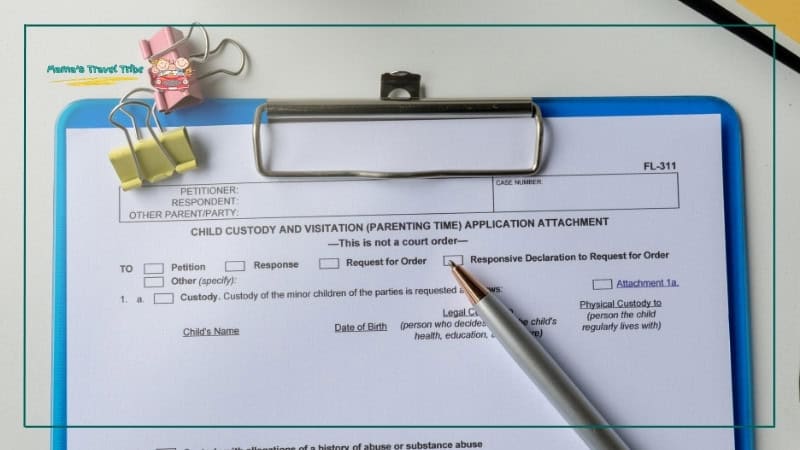
This is where parents usually stop wondering what is technically required and start thinking about what will actually make the trip go smoothly. A grandparent or another adult may be fully trusted by the family, but that does not mean they should travel with only the child’s ticket and hope for the best. When a child is not traveling with a parent, the safest setup is a small packet that covers permission, identity, and emergency contact information.
This matters most on international trips, but it can help on domestic trips too. CBP notes that children traveling internationally without both parents may need written permission from the parent or parents. That is the official piece behind why so many families pack a consent letter when a child is traveling with grandparents or another guardian.
A simple guardian-travel setup looks like this:
| Document | Why it helps |
| Consent letter from parent or parents | Shows permission to travel |
| Child’s passport or travel document | Covers identity and border requirements |
| Copy of parent ID | Supports the consent paperwork |
| Medical authorization form | Helps in case care decisions come up |
| Emergency contact list | Gives the traveler quick backup if something goes wrong |
When a consent letter matters most
A consent letter becomes much more useful when the child is traveling internationally or crossing a border without either parent present. It can also help when the traveler is a grandparent, aunt, uncle, family friend, or other adult whose relationship to the child is not obvious from the booking alone.
For travel documents for minors, this is one of the clearest examples of a paper that may not be checked every time but is still smart to carry. It gives the traveling adult something clear to show if a border officer, airline staff member, or travel provider wants proof that the parents know about the trip.
A good consent letter usually includes:
- the child’s full name
- the names of the parent or parents giving permission
- the name of the adult traveling with the child
- travel dates and destination
- contact information for the parent or parents
Why medical and parent-ID copies still help
Families often stop at the consent letter, but that is not always enough for real-life travel. If the child gets sick, needs treatment, or runs into a delay, the traveling adult may need more than permission to board the trip. A copy of the parents’ identification and a simple medical authorization form can make the situation easier to sort out.
This does not have to turn into a giant legal packet. It just means the adult traveling with the child should have enough paperwork to answer the most likely questions without needing to call home for every detail.
What the traveling adult should always carry
The best setup is one folder that stays in the carry-on, not in checked luggage. The adult traveling with the child should be the one physically carrying it, and the parent should keep digital copies too.
A good carry folder usually includes:
| Keep in the folder | Keep as backup on phone |
| Consent letter | Scanned copy of the same letter |
| Child’s core travel documents | Scans of passport or birth certificate |
| Parent contact information | Same contact list saved digitally |
| Medical authorization if used | Backup photo or scan |
What if a minor is flying without parents
This section matters most for older children, tweens, and teens, but the document question still trips parents up because airline rules and TSA rules are not doing the same job.
TSA says children under 18 do not need identification for domestic U.S. travel, but airlines may have their own unaccompanied minor process, age cutoffs, and paperwork rules. TSA also notes that a child traveling alone who has TSA PreCheck will need acceptable ID to receive that benefit.
So the real question is not just “Does a minor need ID?” It is “What does this airline require for this child, on this route, with this pickup plan?”
A quick breakdown:
| Situation | What usually matters most |
| Minor flying alone on a domestic flight | Airline unaccompanied minor rules |
| Older minor with school ID or other photo ID | May help, depending on airline and age |
| Minor flying internationally | Passport and any required entry documents |
| Minor being picked up by another adult | Authorized pickup details must match the airline process |
How airline unaccompanied minor rules change the document question
Once a child is flying alone, the airline becomes a much bigger part of the document picture. Some airlines require formal unaccompanied minor service for certain ages. Some allow older children to travel more independently. Some want specific forms completed before check-in or at the airport.
That is why this section cannot be handled with one broad answer. A child may not need TSA ID for domestic screening and still need paperwork from the airline that covers:
- the child’s age
- who is dropping them off
- who is picking them up
- contact numbers for the adults involved
When age changes what a child should carry
Age changes the practical answer even when the law is broad. A younger child flying under an airline’s unaccompanied minor program may not need to personally carry much beyond the boarding paperwork the airline provides. An older teen flying alone may benefit from carrying a school ID, passport, or other identifying document even on a domestic trip, simply because it makes the day easier if questions come up.
A simple age-based view:
| Child age or stage | Helpful documents to think about |
| Younger child under formal airline supervision | Airline forms, adult contact details, any required age proof |
| Older minor on a domestic trip | School ID or other backup ID may help |
| Older minor on an international trip | Passport and any route-specific documents |
The main point is not to assume every minor traveling alone needs the same paperwork. The airline’s age policy matters a lot here.
Why pickup and drop-off authorization should be checked early
This is one of the easiest places for families to get caught by surprise. Even when the flight itself is fine, the airline may have strict rules about which adult can check the child in, wait at the gate, or pick the child up after landing. If those names do not match what the airline has on file, the problem happens at the airport, not at home where it is easier to fix.
That is why I would always check this part early:
- who is authorized to bring the child to the airport
- who is authorized to meet them after landing
- what ID those adults need to show
- whether the airline requires names to be submitted in advance
For traveling with a child without both parents, this section overlaps with permission and authority questions, but the airline’s own process is still the piece that decides how the travel day works.
When custody, guardianship, or name mismatch documents matter
Most families never need a full legal packet to travel with their child. But some trips do get extra questions, and they usually come down to one of three things: the adult’s last name does not match the child’s, a guardian is traveling instead of a parent, or there is a custody situation that changes who has authority to make travel decisions. This is where documents for toddler travel and travel documents for minors stop being routine and start becoming very specific to the family.
The goal here is not to overbuild the folder. It is to carry the one or two papers that explain the setup quickly if someone asks.
A practical guide:
| Situation | Document that often helps most |
| Parent and child have different last names | Birth certificate or name-change document |
| Legal guardian traveling with child | Guardianship or court paperwork |
| Divorce or separation with travel restrictions | Custody order or consent paperwork |
| Adoption-related name or parent questions | Adoption record or related court document |
What happens when the parent and child have different last names
Different last names are common and do not automatically create a problem. Still, they can invite a closer look, especially on international trips or when only one parent is traveling. In practice, the easiest way to handle it is to carry one document that connects the names clearly.
For a lot of families, that means:
- the child’s birth certificate
- a marriage certificate
- a divorce decree
- a court-ordered name change document
The State Department uses this same logic in child passport work. If your name is different from the one on your child’s relationship document, it says to submit proof of the legal name change, such as a marriage certificate, divorce decree, or court order. That passport guidance is not written as airport advice, but it shows the same basic principle: if the names do not line up on paper, carry the document that explains why.
When divorce, separation, or guardianship paperwork helps
This is the point where family travel stops being one-size-fits-all. A parent with full legal custody does not need the same paperwork as a parent sharing custody. A grandparent with formal guardianship does not travel on the same footing as a relative who simply has permission for one trip. The right document depends on the legal situation, but the common thread is authority. If the trip could raise a question about who has the right to travel with the child, it helps to carry the paper that answers it.
That can mean:
- a custody order
- a guardianship order
- adoption paperwork
- a signed consent letter if the other parent is not traveling
The State Department’s child passport materials and passport alert materials both point back to these kinds of records when proving legal relationship or authority over a child. They specifically list birth certificates, custody or guardianship court orders, adoption decrees, and similar documents as proof of legal relationship in child passport-related processes.
What kind of backup paperwork is usually enough
Most families do not need every family-law paper they have ever signed. What usually works best is a short, clean set of papers that answers the obvious question without burying the traveler in paperwork.
A good backup set often looks like this:
| If this is the issue | Carry this |
| Different last names | Birth certificate plus one name-linking document if needed |
| One parent not traveling | Consent letter and contact info |
| Guardian traveling | Guardianship or court paperwork |
| Adoption-related questions | Adoption decree or similar legal record |
A lot of this comes down to carrying the paper that answers the most obvious question before anyone has to ask it. If the adult’s name does not match the child’s, or the adult is traveling in place of a parent, one clean supporting document usually does more than a long explanation at the counter.
How to organize child travel documents before a trip

A good document setup should make check-in easier, not add one more thing to manage. I like keeping child travel papers in one small folder that stays in the carry-on from the day we leave until we get home. The goal is simple: if someone asks for proof of age, a passport, or a consent letter, I do not want to start digging through three bags while holding up the line.
This part matters because families often have the right documents, just not in a form that is easy to use. A passport tucked into one bag, a birth certificate buried in another, and a phone photo that takes two minutes to find is not a real system. A simple setup works better.
A basic document system:
| Where it lives | What should go there |
| Main travel folder in the carry-on | Passport, birth certificate copy, consent letter, booking printout |
| Phone backup | Scans of the key documents |
| Secure cloud folder | Extra backup set in case the phone is lost |
When to carry originals
Originals matter most for the documents that do the real work. If the trip is international, that means the child’s passport. If the trip depends on proof of age, an original or certified birth certificate is the strongest version to carry. If there is a custody or guardianship issue that could actually come up during travel, the main legal document or a proper certified copy may matter more than a plain scan.
I keep the originals limited to the papers that would actually need to be shown:
- passport book for international trips
- birth certificate if I expect an age or relationship question
- any consent or guardianship paper that matters for this exact trip
That way the folder stays useful instead of turning into a pile.
How to set up a paper folder that actually works
The paper folder should be small enough to hold in one hand and clear enough that you can flip to what you need fast. I would not overcomplicate it. One folder, a few sections, nothing fancy.
A simple order usually works best:
| Folder section | What goes there |
| Front | Booking confirmations and itinerary |
| Middle | Child passport or proof-of-age documents |
| Back | Consent letters, custody papers, emergency contacts |
If the child is flying domestically and age proof is the real issue, does my child need a birth certificate to fly domestically is the question to settle before the folder gets packed.
What should stay in the carry-on and never go in checked luggage
Anything that could stop the trip should stay with you. I would never put a child’s passport, proof-of-age document, or consent paperwork in checked luggage. If that bag is delayed or misplaced, the rest of the packing does not matter much.
The carry-on should hold:
- passport
- birth certificate or copy if you are carrying one
- consent letter if needed
- booking details
- emergency contacts
Checked luggage is for clothes. The carry-on is for the papers that let the trip keep moving.
How many copies to carry and where to keep them
I like having one set of papers that does the real work and one backup set that keeps a small problem from turning into a bigger one. You do not need piles of duplicates. You need enough copies that if one document gets misplaced, you are not left standing in an airport or cruise terminal with nothing to show.
For most family trips, one physical set and one digital set are enough.
A simple copy system:
| Copy type | Best use |
| Main physical set | The documents you expect to show during travel |
| Backup physical set | A second copy in case the main folder gets misplaced |
| Digital copy set | Fast backup on your phone or in cloud storage |
The one physical folder most families actually need
This should be the working folder. It stays in the carry-on and holds the papers that matter most for the trip in front of you. I would rather have one small folder that I can open quickly than a thick binder full of paper I will never touch.
A strong working folder usually includes:
- passport if the trip is international
- proof-of-age document if the child’s booking depends on age
- consent letter if someone may ask for travel permission
- booking confirmations
- emergency contacts
That is usually enough for the main travel day.
Where to keep the backup copy
The backup should not live in the same place as the main set. If both copies are in one folder, it is not really a backup. I usually think of the second set as the “if something gets lost” version.
A practical backup setup looks like this:
| Backup location | What to keep there |
| Separate part of the carry-on | Printed copy of the key papers |
| Other adult’s bag, if two adults are traveling | Second paper copy set |
| Hotel safe after arrival | Extra copy set not needed for day trips |
The point is not to carry three full binders of paper. It is to avoid a single point of failure.
Why the digital backup still matters
The digital copy is not the main plan. It is the recovery plan. A phone scan will not always replace an original document, but it can help you pull up a passport image, confirm a booking number, or show a readable copy of a birth certificate while you sort out the next step.
The easiest digital setup is simple:
- scans saved on your phone
- the same scans saved in cloud storage
- clear file names so you are not searching through random photos
I would still treat the digital version as backup, not as the only version of any document that really matters.
Common child travel document mistakes parents make
Most document problems are not dramatic. They are small misses that show up at the worst time. A parent assumes domestic and international rules are basically the same. A passport gets checked once at booking and never checked again. A child’s age matters for the ticket, but nobody packs proof of age. None of that feels like a big mistake at home. It feels bigger at the counter.
A simple mistake check helps:
| Common mistake | Why it causes trouble |
| Treating domestic and international trips the same | The document rules are not the same |
| Forgetting proof of age for a lap infant | Airline may still ask at check-in |
| Relying on one document only | No backup if the paper is lost or questioned |
| Bringing the wrong passport type | Passport card does not work for international air travel |
| Skipping airline or cruise checks | Provider rules can still matter |
| Missing a name mismatch | Counter or border questions take longer to clear up |
Assuming domestic and international rules work the same way
This is probably the most common mistake I see. A child can fly domestically in the U.S. without standard ID and still need a passport for an international flight. Parents read one rule, remember the easy part, and accidentally carry that answer into the wrong kind of trip.
TSA’s domestic minors guidance is clear for U.S. flights. CBP’s international guidance is clear for international travel. The problem is not that the rules are hidden. It is that they answer different questions.
Forgetting proof of age for a lap infant
A lot of parents hear that kids do not need ID for domestic flights and stop there. Then they get to the airline counter with a lap infant booking and realize the airline may still want proof of age. This is the exact kind of problem that feels annoying because it is so preventable.
For families with babies and toddlers, I would rather have one simple proof-of-age document in the folder than try to argue the point at check-in.
Bringing the wrong passport type for the trip
This one shows up most often with cruises and border trips. A passport card sounds close enough until the family ends up needing an international flight, or until the trip includes a part the card does not cover. The State Department is very clear that the passport card cannot be used for international air travel. The passport book can.
That is why the passport book is usually the safer family option, especially if the trip could change shape or includes more than one travel mode.
How early to check document requirements before travel
Document problems rarely get easier by waiting. The earlier you check them, the more likely you are to catch the kind of issue that can still be fixed without panic. I do not mean rechecking every paper every week for months. I mean having a simple timeline so the big things are handled early and the small things are confirmed close to departure.
A workable timing plan looks like this:
| Timing | What to check |
| At booking | Passport need, visa need, travel mode rules, name match on tickets |
| About one month before | Passport validity, consent paperwork, any missing applications or certified copies |
| About one week before | Airline, cruise line, or route-specific rules; folder and backups |
| Day before | Final document check in the carry-on |
What to verify at the booking stage
Booking is when the biggest document questions should get answered. Is this domestic or international? Is there a cruise involved? Will the child travel with both parents, one parent, or another adult? Does the child need a passport book, a birth certificate, or a consent letter for this exact setup?
This is also when I would check the child’s full name against the booking. If there is a mismatch, it is much easier to fix early than at the airport.
What to review one month before departure
A month out is when the practical checks matter most. If the passport is missing, expiring too soon, or still in process, this is where you want to know. The U.S. Department of State passport pages are the right place to check current processing and child passport requirements.
A one-month check usually includes:
- passport validity
- any visa or authorization requirements
- consent paperwork if one parent or another guardian is traveling
- proof-of-age documents if needed
- certified copies if the trip depends on them
What belongs in the day-before review
The day before is not when you solve a missing passport. It is when you confirm that the right papers are physically in the right bag. This is the fastest check in the whole process, but it matters because it catches the simple mistakes.
A good day-before check:
- passport or birth certificate is in the folder
- consent letter is packed if needed
- digital backups are on the phone
- adult IDs are ready too
- nothing important is sitting in the printer tray or on the kitchen counter
How early to check document requirements before travel
Document problems rarely get easier by waiting. The earlier you check them, the more likely you are to catch the kind of issue that can still be fixed without panic. I do not mean rechecking every paper every week for months. I mean having a simple timeline so the big things are handled early and the small things are confirmed close to departure.
A workable timing plan looks like this:
| Timing | What to check |
| At booking | Passport need, visa need, travel mode rules, name match on tickets |
| About one month before | Passport validity, consent paperwork, any missing applications or certified copies |
| About one week before | Airline, cruise line, or route-specific rules; folder and backups |
| Day before | Final document check in the carry-on |
What to verify at the booking stage
Booking is when the biggest document questions should get answered. Is this domestic or international? Is there a cruise involved? Will the child travel with both parents, one parent, or another adult? Does the child need a passport book, a birth certificate, or a consent letter for this exact setup?
This is also when I would check the child’s full name against the booking. If there is a mismatch, it is much easier to fix early than at the airport.
What to review one month before departure
A month out is when the practical checks matter most. If the passport is missing, expiring too soon, or still in process, this is where you want to know. The U.S. Department of State passport pages are the right place to check current processing and child passport requirements. A one-month check usually includes:
- passport validity
- any visa or authorization requirements
- consent paperwork if one parent or another guardian is traveling
- proof-of-age documents if needed
- certified copies if the trip depends on them
What belongs in the day-before review
The day before is not when you solve a missing passport. It is when you confirm that the right papers are physically in the right bag. This is the fastest check in the whole process, but it matters because it catches the simple mistakes.
A good day-before check:
- passport or birth certificate is in the folder
- consent letter is packed if needed
- digital backups are on the phone
- adult IDs are ready too
- nothing important is sitting in the printer tray or on the kitchen counter
The easiest document checklist for family travel
This is the section I would want open the night before a trip. Not because every family needs every document on the list, but because this is where you stop thinking in general terms and start checking the exact setup in front of you.
The easiest way to do that is by travel mode and travel situation. A domestic flight has one set of likely questions. An international flight has another. A cruise can overlap both. One-parent travel and grandparent travel add a permission layer that a basic family trip may not need at all.
A good checklist should do two things:
- tell you what to pack
- tell you why that document matters for this kind of trip
That second part matters because it keeps parents from carrying random paperwork while still missing the one record that actually solves the likely problem.
Domestic flight checklist
For a domestic U.S. flight, most families do not need a huge document packet for the child. TSA says children under 18 do not need standard identification for domestic travel. The part that usually matters is proof of age, especially if a baby is flying as a lap infant or a toddler is close to an age cutoff. The adult still needs their own ID.
If I were checking a domestic trip folder, I would look for this:
| Domestic flight document | Who needs it | Why it matters |
| Adult photo ID | Traveling adult | Required for TSA screening |
| Child birth certificate or passport copy | Baby or young child | Useful for proof-of-age questions |
| Booking confirmation | Everyone | Helps with check-in or counter issues |
| Consent letter if relevant | One-parent or guardian travel | Backup if permission questions come up |
A strong domestic checklist looks like this:
- adult ID is packed and easy to reach
- proof-of-age document is packed if the child is a lap infant or close to age two
- booking details are easy to pull up
- any supporting paperwork for name differences or guardian travel is already in the folder
International flight checklist
International trips are different because the passport becomes the starting point, not the backup. If the passport is missing, expired, or mismatched to the booking, the rest of the checklist does not matter much. Depending on the destination, the child may also need a visa, travel authorization, or supporting paperwork tied to one-parent or guardian travel.
CBP says children need their own passport, visa, or other required international travel documents. The State Department’s travel pages are the right place to confirm destination-specific rules and passport validity issues.
If I were packing for an international trip with a child, this is the checklist I would want:
| International flight document | Who needs it | Why it matters |
| Passport book | Every child | Required for international air travel |
| Visa or travel authorization if needed | Child and adults where applicable | Required for entry to some countries |
| Booking details with exact name match | Every traveler | Helps avoid check-in problems |
| Consent letter if one parent is absent | Child traveling with one parent or guardian | May be requested depending on route or country |
| Backup copies | Everyone | Useful if the main document is lost or hard to access |
A more detailed international checklist:
- child’s passport is packed in the carry-on
- passport name matches the booking exactly
- passport validity has been checked for the destination
- visa or entry authorization has been confirmed if the country requires it
- consent paperwork is packed if the child is not traveling with both parents
- digital copies of the key documents are saved on the phone and in cloud storage
This is where a lot of parents realize that the broad question does my child need a passport to travel really means “does my child need a passport for this exact route?” For international flights, the answer is almost always yes.
Cruise checklist
Cruises are the section that needs the most careful reading because families often assume the cruise answer and the flight answer are interchangeable. They are not. Some closed-loop cruises allow certain alternatives to a passport for U.S. citizen children. Some do not. And the minute a flight is added before or after the cruise, the document picture can change again.
CBP’s cruise documentation guidance is the starting point, but the cruise line’s own requirements still need to be checked too.
For a cruise, I would check:
| Cruise document | When it matters most | Why it matters |
| Passport book | International itinerary or safer all-around setup | Covers more travel outcomes, including emergencies |
| Birth certificate | Some closed-loop cruise situations | May be accepted for qualifying child travelers |
| Cruise booking confirmation | Every cruise | Needed for boarding details |
| Consent letter | One-parent or guardian cruise travel | Helps if permission questions come up |
| Flight documents too | Any cruise with flights attached | Cruise paperwork alone may not cover the full trip |
A practical cruise checklist:
- confirm whether the itinerary is closed-loop or not
- confirm whether the child’s citizenship and age fit the alternative-document rules
- check the cruise line’s own document list
- pack the passport anyway if the family wants the stronger option
- recheck the flight documents too if the family is flying to or from the port
Your pre-departure child document audit
This is the last check I would do before leaving for the airport, heading to the port, or handing a travel folder to a grandparent. By this point, the big planning decisions should already be done. You are not trying to figure out whether your child needs a passport or whether a birth certificate might work. You are checking that the right documents are actually in the right place, in the right form, for the trip you already booked.
This matters because a lot of document problems are not true planning failures. They are handling failures. The passport exists, but it is in the desk drawer. The consent letter was signed, but it never made it into the carry-on. The child’s ticket name is correct, but nobody checked the passport validity one last time. A pre-departure audit catches those mistakes when they are still easy to fix.
I think of this as the final travel-folder check, not as a full research step. At this stage, you should already know the route, the travel mode, and the likely document questions. The audit is just there to make sure nothing important slips through at the very end.
A strong final audit answers these questions:
| Audit question | What you want the answer to be |
| Does each child have the right identity or proof-of-age document for this trip? | Yes |
| If the trip is international, is the passport packed and still valid? | Yes |
| If one parent or a guardian is traveling, is the support paperwork in the folder? | Yes |
| Do you have paper and digital backups of the key records? | Yes |
| Have you rechecked the airline, cruise line, or route rules one last time? | Yes |
| Does the adult traveler also have their own documents ready? | Yes |
Confirm each child has the right identity proof for this exact trip
This is where the travel mode matters most. A domestic flight with a ticketed child is not the same as a domestic flight with a lap infant. An international flight is not the same as a closed-loop cruise. A child traveling with both parents is not the same as a child traveling with a grandparent.
The question I would ask here is not “Do I have documents?” It is “Do I have the right document for this specific setup?”
A practical trip-by-trip check looks like this:
| Trip setup | Main child document to confirm |
| Domestic flight with lap infant | Proof of age |
| Domestic flight with ticketed child | Booking plus backup age proof if useful |
| International flight | Passport book |
| Closed-loop cruise | Passport or accepted citizenship proof, depending on the itinerary |
| One-parent or guardian travel | Child document plus any needed permission paperwork |
This is also the point where those narrower internal resources do their best work in your planning process. If the last lingering question is still about flight paperwork, the internal post on what documents do kids need to fly is the one I would revisit.
Recheck passport validity and supporting paperwork
If the trip is international, I would do one quiet passport check before the folder gets zipped. Not just “is the passport there?” but:
- is it the correct passport
- does the name match the booking exactly
- is the passport still valid for the destination’s rules
- is the child’s passport packed in the carry-on, not checked luggage
The State Department’s international travel pages are still the best official place to confirm destination-specific passport and entry requirements before departure.
If the child is not traveling with both parents, this is also the moment to confirm that the support paperwork is physically in the folder:
- consent letter
- parent contact information
- custody or guardianship paperwork if relevant
- any document explaining a surname difference if that could become a question
A lot of travel stress disappears when this check happens at home instead of at the counter.
Make sure copies exist in both physical and digital form
I would never treat the digital copy as the main plan, but I also would not travel without it. A phone scan of the passport, birth certificate, consent letter, and booking details is one of the easiest ways to lower stress if something gets misplaced or if you need to confirm details quickly.
A simple final copy check:
| Copy type | What to confirm |
| Main physical documents | In the travel folder and easy to reach |
| Backup paper copies | Stored separately from the main folder |
| Phone scans | Saved clearly, not buried in random photos |
| Cloud backup | Available if the phone is lost or damaged |
This does not need to be elaborate. One clean paper folder and one clean digital set is enough for most families.
Recheck the adults’ IDs and the backup plan too
The child’s documents usually get all the attention, but the adult’s ID can stop the trip just as fast. For domestic travel, the adult still needs acceptable ID for TSA. For international travel, the adult’s passport matters just as much as the child’s. This is also the time to ask one last practical question: if one document goes missing, what is the backup?
That backup may be:
- a printed spare copy in another bag
- a digital copy on your phone
- the other parent holding a second paper copy
- a hotel-safe plan once you arrive
The point of the audit is not perfection. It is to leave home knowing the folder is ready, the names match, the key documents are accessible, and the trip is not depending on memory or luck.
FAQ
Does my child need a birth certificate to fly domestically?
Usually not as a TSA ID requirement, but it can still be useful. On domestic U.S. flights, children under 18 usually do not need standard identification for security. A birth certificate can still help with proof-of-age questions, especially for a lap infant or a child close to age two.
What documents do kids need to fly internationally?
For international flights, children need their own passport. Depending on the destination, they may also need a visa, travel authorization, or supporting paperwork for one-parent or guardian travel.
Does a baby need a passport to travel?
For domestic U.S. flights, usually no. For international air travel, yes. A baby needs their own passport if they are flying internationally, even if they are sitting in a parent’s lap.
What if my child is flying with grandparents?
The adult traveling with the child should usually carry the child’s main travel documents, a consent letter from the parent or parents, emergency contact information, and any medical authorization paperwork the family wants available during the trip.
Does a minor need ID to fly without parents?
For domestic U.S. travel, minors usually do not need standard ID for TSA screening, but airline unaccompanied minor rules may still require forms, age checks, and pickup authorization. Older minors may also benefit from carrying a school ID or other identifying document.
What if my child and I have different last names?
Different last names do not automatically cause problems, but they can lead to extra questions. A birth certificate or another document that connects the names can make check-in or border questions much easier to handle.
Do kids need passports for cruises?
Sometimes yes, sometimes not. Some cruise itineraries allow other documents for U.S. citizen children, but many families still use passports because they are stronger and more flexible, especially if flights are part of the trip too.
What counts as proof of age for a lap infant?
A birth certificate is the most common proof-of-age document. A passport also works. The point is to have one clear document that shows the child’s date of birth in case the airline asks.
Conclusion
Most child travel document stress comes from mixing together different types of trips and different types of rules. Once you separate the trip into its real parts—domestic or international, flight or cruise, both parents or not—the document list usually gets much easier to manage.
For most families, the smartest move is not carrying every paper you own. It is carrying the right papers in a simple folder, with a backup copy that is easy to reach. If the passport is valid, the names match, the proof-of-age document is packed when it should be, and any permission paperwork is already handled, the trip usually starts in a much better place.